GamerTab That was an excellent one.
Evengyny Thanks for the memories!
SunnyHello Nice effects though.
Geraldine The story, direction, characters, and writing/dialogue is akin to taking a tranquilizer shot to the neck, but everything else was so well done.
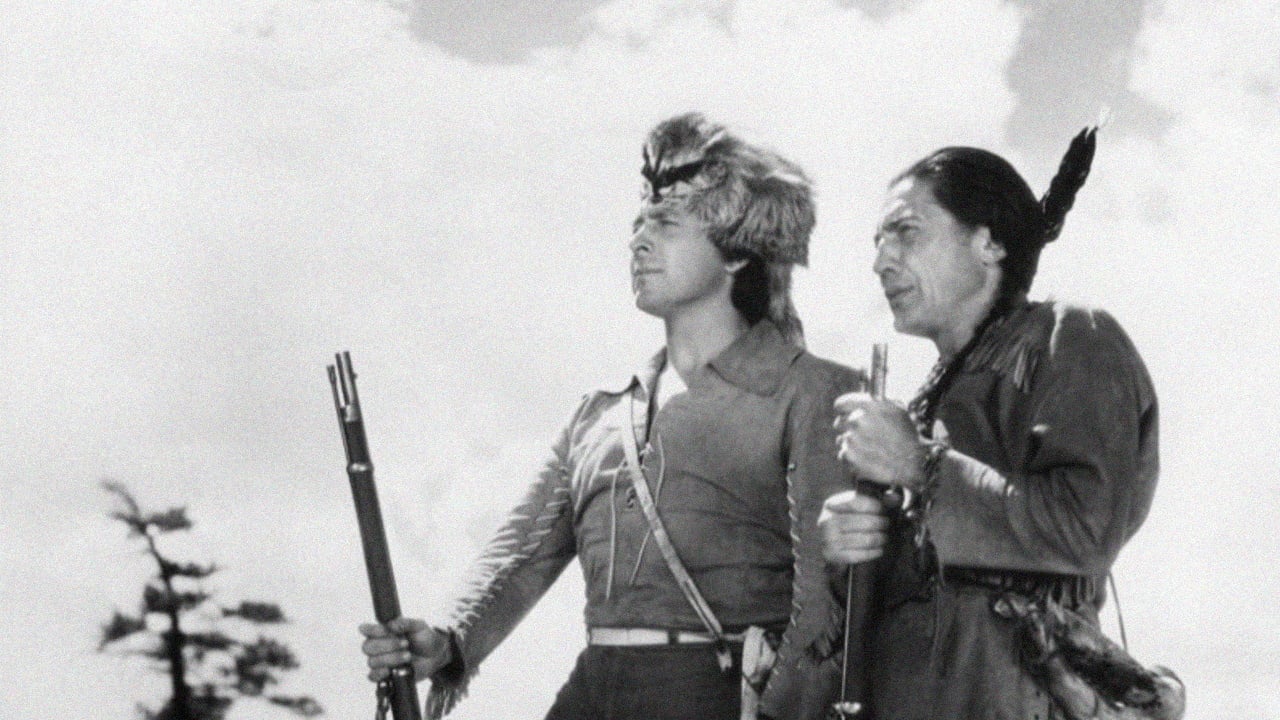
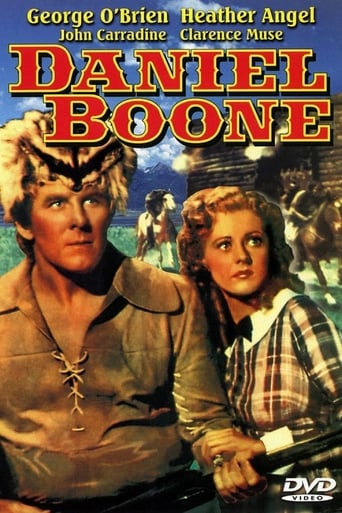
boblipton George O'Brien swaps his usual cowboy gear for a coonskin cap to play Daniel Boone. It's an "eastern western", as he leads a wagon train over the Appalachian Mountains to found a settlement in Kentucky. In the course of the movie, he must court Heather Angel, deal with vengeful and effete Ralph Forbes, escape from Indians who want to burn him alive, under the command of renegade John Carradine, and an attack of the settlement.It's a well done B under the direction of David Howard, with some lovely compositions by cinematographer Frank Good. In story terms, it hearkens back to LAST OF THE MOHICANS, with a faithful, if brutal Indian companion, played by George Regas. Modern viewers may be upset by scene-stealing Clarence Muse, playing a slave; he does so with enormous dignity. For fans of Mr. O'Brien, it will be a delight.
kevin olzak 1936's "Daniel Boone" benefits from the casting of George O'Brien in the title role, still a few years away from retirement. An accurate portrait of the rigors of life on the Kentucky frontier, complicated by omnipresent evildoer Simon Girty (John Carradine), leading a band of renegade Indians that indulge in murder and rape. Also conducting villainy from a safe distance is prissy British aristocrat Stephen Marlowe (Ralph Forbes), supported by the Virginia legislature in confiscating the land built up by Boone's people. Love interest is provided by Heather Angel, solid support from George Regas and Clarence Muse. Later appearing as a murderer on the 60s teleseries DANIEL BOONE ("The Witness"), Carradine, on loan from Fox, excels in one of his flashier villain roles; too bad the picture sags a bit when he's off screen too long (he appropriately wears a skunk-skin cap, as opposed to Boone's traditional coonskin).
MartinHafer This 1936 Daniel Boone movie starts badly—with a Plains Indian shooting a flaming arrow—even though Boone never encountered any of these Indians since he lived in the Appalachians—many, many, many miles away. In the 1700s when Boone lived, no contact had yet been made between Americans and these tribes. However, natives in the course of the film appeared to be the correct type and the film turned out to be pretty good.The film stars George O'Brien as Boone. He was pretty famous during the late silent era with the leads in such films as "Sunrise". He also later made a name for himself in westerns. He was pretty good as the believably rugged title character. His job in the film is to lead a group of colonists to new land in the west (probably around what is Tennessee or Kentucky—just before the American Revolution. However, there are a couple different baddies who are out to stop them. The most obvious of these is a guy played by John Carradine—a white man who has rejected his people and stirs up the Indians to attack. It seemed quite appropriate that he wore a skunk-skin cap! The other, less obvious, is a prissy Englishman who is in love with a girl who Boone secretly adores. See the film to see how it all ends, though I will say the end was a bit of a surprise, as good didn't necessarily triumph over all evil in this tale.This film is from RKO---and I am a bit surprised it was allowed to lapse into the public domain. It's rather entertaining and offers a look at the early settlement of the country. But, sadly, the sound is a bit uneven, though the print otherwise looks fine.Usually I make a lot of comments about the historical inaccuracies of the film. However, the spirit of the film is reasonably close to real life—and Boone's mythic status makes it difficult to determine what he REALLY did do!
dinky-4 A well-crafted script efficiently sets up three areas of conflict: white settlers in 1775 Kentucky vs. local Indians stirred up by a renegade named Simon Girty; these same white settlers vs. corrupt officials back in Richmond; and he-man Daniel Boone vs. fancy-man Stephen Marlowe for the affections of the beautiful Virginia Randolph. These conflicts are woven together into a briskly-paced frontier drama which, while showing its age, still holds one's interest. Its chief fault is an ending which, at least on the tape available, seems unfocused and a bit confusing.Though not well remembered today, leading man George O'Brien was a popular actor in late silents and early talkies. During a fight scene in 1924's "The Iron Horse" his shirt was torn off and audiences got an uncommon eyeful of "beefcake" which earned for O'Brien a nickname: the Chest. Though only 35 or 36 years old when he filmed "Daniel Boone," O'Brien shows signs of middle-age in the form of a somewhat expanded waistline but he's still featured in an extended "beefcake" scene. Captured by Indians he's tied, shirtless, to a post and soon surrounded by burning piles of wood. His bindings allow him to move in a tight circle around the post, (an authentic touch), so O'Brien sweats and squirms as he tries to avoid the tongues of flame. It's a good scene but cut far too short by an all-too-easy rescue. (A shirtless O'Brien also suffered through a prison flogging in 1928's "Honor Bound" but prints of this movie seem to be unavailable.)John Carradine makes a hissable villain and Heather Angel is an appropriately pretty heroine but Ralph Forbes seems a bit "too, too" as the no-good Stephen Marlowe. No woman would regard him as a serious competitor for George O'Brien! Black actor Clarence Muse has a role surprisingly free of most of the era's usual stereotypes.