Odelecol Pretty good movie overall. First half was nothing special but it got better as it went along.
Livestonth I am only giving this movie a 1 for the great cast, though I can't imagine what any of them were thinking. This movie was horrible
Humaira Grant It’s not bad or unwatchable but despite the amplitude of the spectacle, the end result is underwhelming.
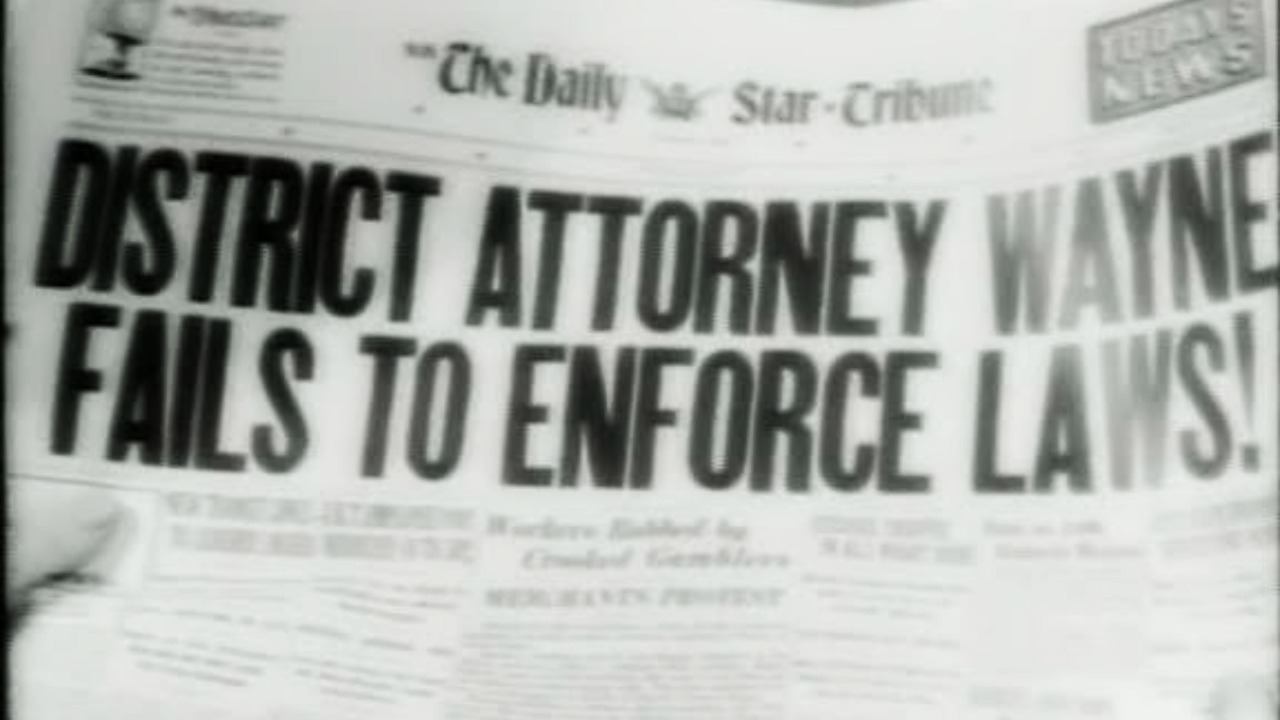
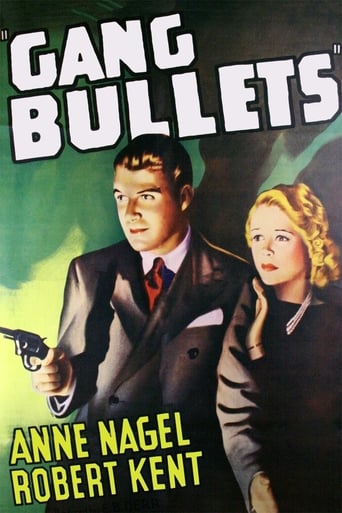
zardoz-13 "Dracula's Daughter" director Lambert Hillyer and prolific scenarist John T. Neville have concocted a compelling little crime thriller. A virtuous district attorney tangles with a nefarious gangster but the gangster knows how to control the law to serve his own interests. The refreshing thing about this Monogram Pictures release is not only its level of intelligence but also its candor in documenting the fragility of the criminal justice system. The producers open "Gang Bullets" with this solemn preamble that serves as a disclaimer of sorts: "This picture is dedicated to those public officials whose duty it is to combat crime. The greatest shield to the modern criminal is the law which declares him innocent until proved guilty. The late William Howard Taft, Chief Justice of the U.S. Supreme Court, in an address said: "The administration of the criminal justice in this country is a disgrace to civilization. The trial of the criminal seems like a game of chance—with all the chances in favor of the criminal, if he wins he seems to have the sympathy of a sporting public." "Gang Bullets" reminded me of director Don Siegel's "Dirty Harry." Like "Dirty Harry," "Gang Bullets" argues that the criminal justice system is too lenient on criminals. Essentially, this violent melodrama adheres to a code of rules, and survival amounts to a chess match between Good and Evil.The action unfolds when two mob gunmen take a squealer for the last ride. Of course, we aren't shown the murder, but we can hear the gunshots off-camera. Although he pleaded they release him for the sake of his wife and children, these heartless hoodlums knock him off. No sooner has this killing happened than the Police Commissioner R.D. Brown receives a call from the press. "You newspaper guys give me a pain. Certainly I know 'Big Bill' is in back of this. I can't arrest a person because I think he's a murderer. You fellas can print rumors; I have to prove a murder charge." One of Brown's detectives enters and reports 'Big Bill' didn't lose his nerve when they showed him Trent's dead body. "We'll have to catch that bird in the egg," Brown observes. "That's not so easy," Detective Craig complains, "so long as he has others do his killings. Craig surprises Brown with news he still has 'Big Bill' in custody. "Take him down to the midnight train," Brown instructs. "I'm getting in touch with every chief of police for the next thousand miles to see that you don't get off that train." Brown orders Craig to take Anderson out the back door so that Anderson's attorney doesn't see them.'Big Bill' Anderson (Morgan Wallace) is a cunning crime czar who always lands on his feet. He spins a murderous web of corruption, larceny, deceit, and anarchy. He is wise enough to let his henchmen perform the dirty work so he cannot be convicted for what they do. 'Big Bill' is so shrewd that he pays his income tax so as not to suffer the fate that befell Al Capone. After Police Commissioner Brown sends 'Big Bill' packing out of town from one town to another, the villain exploits the leniency of law to get off the train at Bridgetown and sink his tentacles into what he calls a "dead" town. "I can't chase Anderson out of town until Reardon gets something on him," laments District Attorney Dexter Wayne (the ever reliable Charles Trowbridge) to Assistant District Attorney John Carter (Robert Kent). During their first meeting, Anderson displays his knowledge of criminal law to Wayne, "I've always been interested in our Constitution. They must have been thinking of me when they added that bill of human rights. Article Four, the right of people to be secure in their person. Article Five: No person shall be held for a crime unless on indictment by a grand jury. Article Six, in all criminal prosecutions, the accused shall enjoy the right to be informed of the nature and the cause of the accusations, to be confronted with the witnesses against him, and to have counsel for his defense." The Police Chief comments, "That's a bill of human rights never meant to protect human rats." Anderson retorts, "And to think some of our best citizens use it to hide their skulduggery." Wayne warns Anderson that Bridgetown won't be healthy for him.Nevertheless, 'Big Bill' resurrects the gambling dens. Initially, instead of averaging 70 per cent of the profits from gambling, he decides that they should give the suckers 70 per cent because they can get them back later. "You fellows must remember one thing: It pays to advertise," 'Big Bill' advises them. "What do you think put over every successful business: advertising. In our business, we cannot run newspaper ads, but we can get them talking about us. Let'em win, fifty, they'll brag it was a hundred. The next one will say it was a thousand. Everyone who hears about it is a new sucker. They'll be mortgaging them homes for us to make easy money." 'Big Bill' vows, "When I get through with this half-baked hamlet, it will be a live city." Consequently, the authorities find themselves between a rock and a hard place with the elusive 'Big Bill.' "You cannot expect us to fight crime with the kind of laws we have to work with," complains Assistant District Attorney Carter. "It's like hunting tigers with bean-shooters. You think criminals made these laws to protect themselves." The fun of "Gang Bullets" is the heroes and the villains are evenly matched and smart as whips. One of the least believable plot points involves the way that the assistant district attorney obtains a recording of a conversation between Dexter Wayne and Anderson. Despite its obvious low budget, "Gang Bullets" is a swiftly paced, hard-hitting, thriller with a surprise or two and an amusing attitude that it takes to itself.
wes-connors Noble district attorney Charles Trowbridge (as Dexter Wayne) and young assistant Robert Kent (as John Carter) are put to task when racketeer Morgan Wallace (as "Big Bill" Anderson) moves his base of criminal operations to their law-abiding Bridgetown. With sharp lawyers and knowledge about his rights, Mr. Wallace proves to be a tough mobster to convict, and the town becomes riddled with scandal. Pretty Anne Nagel (as Patricia "Pat" Wayne), the fiancée of Mr. Kent and daughter of Mr. Trowbridge, is startled when Wallace's corruption gets too close for comfort...This is a cheap, slow-moving crime drama from the "Monogram" company. The first interesting scene involves some rough interrogations - watch cameras keep rolling as Donald Kerr (as Joe Armstrong) gets his hat tossed onto the floor by a policeman. No retakes there. The highlight may be seeing young Bennie Bartlett (as Billy Jones), future "Bowery Boys" member, play a twelve-year-old who gets hit harder than most films of the era might allow. Top-billed Ms. Nagel isn't given very much to do. Trowbridge does what he can with the story's most interesting role.**** Gang Bullets (11/10/38) Lambert Hillyer ~ Robert Kent, Anne Nagel, Charles Trowbridge, Morgan Wallace
bkoganbing Forced out of one city by some extralegal methods of one district attorney, gangster Morgan Wallace simply moves to another to set up shop. Wallace is into all kinds of illegal rackets and has the police and DA really stumped. The press is clamoring for DA Charles Trowbridge's scalp, a prospect not pleasing to Trowbridge's daughter Anne Nagel and her fiancé Robert Kent who is also Trowbridge's number one assistant.Gang Bullets comes from out of Monogram Pictures so you can't expect too much and believe me you won't get it. The film has some interesting ideas that don't seem to follow up. At one point Wallace talks about building his racket by letting a few suckers win some big pots at his gambling establishment and then becoming advertisements. It sounded like an interesting film idea that is never followed up on. There's also an interlude where two of Wallace's henchmen bring a third wounded comrade into some woman's home with her 12 year old boy. It plays like a bit from another film entirely. In fact that whole premise was used later on with much greater effect in The Desperate Hours.In the end Trowbridge goes to some extraordinary lengths to bring down Wallace. But even the end is rather anti-climatic. Stuff like Gang Bullets was done so much better over at Warner Brothers.
classicsoncall I won't say this is one of the worst movies I've ever seen, because it isn't. But boy, it sure is one of the dumbest. Though the story has a fairly good premise and an interesting hook with the 'Junius' letters, it all crumbles under third grade level writing and if it's possible, even worse performances by the lead characters. But no sense in dwelling on the low points as if they were negatives, one of the bright spots of films like this is the ability to make fun of the genuine goofy stuff presented.Like this one - how is it that when three of Big Bill's henchmen escape from the cops with the one named Al critically shot, they make their getaway one whole city block over from where they started? Huh? Besides that, radio reports carry news of the escape in real time while it's happening! Then, henchman Red admires the way Al stays one step ahead of the cops by croaking - this is truly inspired stuff!I have to admit though, the film had me fooled with the identity of 'Junius', I thought it was Assistant D.A. Carter (Robert Kent) trying to further discredit his boss Dexter Wayne (Charles Trowbridge). In the finale though, with Wayne holding the grenade about to blow when he let go, I was fully expecting Superman to bust through a wall to make the save. Instead, Carter directs his boss to throw the grenade out the window. Hey, wouldn't it have been a good idea to OPEN THE WINDOW FIRST??!!!Monogram Pictures was well known for it's shoestring cheap budgets and low production values, but this film makes the Charlie Chan series of the same era look like "L.A. Confidential". Still, as I hope I've explained, you can have a good time with this one if you're in the right frame of mind. Watch especially for henchman Armstrong's (Donald Kerr) scene when he makes his 'confession' to the police, it's a great preview for roles that would be made famous in the Nineties by Joe Pesci.