PodBill Just what I expected
UnowPriceless hyped garbage
Dirtylogy It's funny, it's tense, it features two great performances from two actors and the director expertly creates a web of odd tension where you actually don't know what is happening for the majority of the run time.
Mandeep Tyson The acting in this movie is really good.
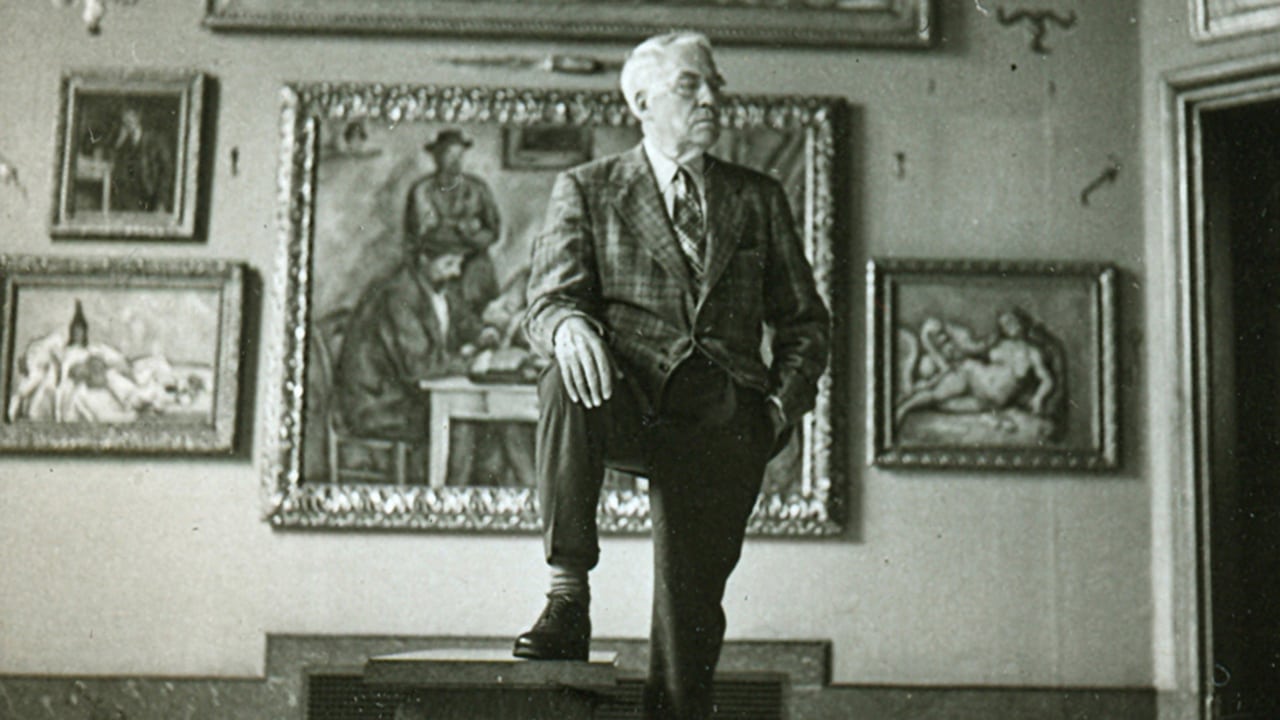
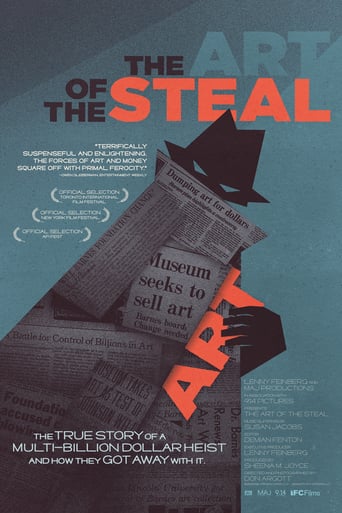
napierslogs "The Art of the Steal" is about not only the greatest art theft in the world, but probably the greatest crime ever committed. And at this point, let's define "greatest". In this sense, "great" means comparatively large in size or number, unusual or considerable in power or intensity, and of an extreme or notable degree. It does not mean wonderful, first-rate, or good. This theft wasn't even deemed a crime in the first place and was committed by mobsters, city of Philadelphia politicians, and educators.The documentary follows the story chronologically. It starts with Dr. Albert C. Barnes' educating himself about art and building an immense art collection. He's a good guy. He wanted to appreciate art for art's sake, not for its perceived value. He started the Barnes Foundation, complete with approximately $30 Billion dollars worth of art work by some of the world's most eminent painters. And, yes, that's Billion with a "B". The legal articles of incorporation for the Barnes Foundation made it very clear that this was a private, educational institution. Art students were encouraged to sign-up for classes or a visit. The "fat cats" of Philadelphia were not. The next part of the documentary was Barnes' death in 1951. It makes you gasp if you think about what could happen to the Foundation if he didn't adequately prepare for its life after his death. The story kept weaving its way through twist after twist and for somebody who is completely uneducated in art history, each point was more shocking than the one before.The good news is that Barnes' did adequately prepare the Foundation in the event of his death. He had a legal Will and Testament firmly in place. It was first left to his trusted friend, Violette de Mazia, and she did the best she could. Even in the event of her death, which happened in 1988, Barnes still had the legal ownership of the Foundation intact. The bad news is that greedy, manipulative people in power do not have to follow legal documents. To them the legal system is this little joke which they can just look down on and laugh at as they proceed to do the opposite of what was supposed to happen – legally and morally speaking that is."The Art of the Steal" is a great documentary because they even managed to get people like "educator" Richard Glanton, the Governor of Pennsylvania, the Mayor of Philadelpha, and a corrupt judge to speak in front of the camera admitting to what they did, in direct opposition to the law, completely nonchalant to their immoral actions. And the world just has to sit back and watch them commit the greatest crime ever.
penberthyp In the eleventh hour Merion township forgets it's gripes about bus traffic and realizes it might lose something valuable. After forbidding the Museum to build a 56 car parking lot in a very petty fashion the neighbors of the foundation are portrayed as victims of the move at the end of the movie. I'm sorry. Glanton may be a clod, but he was forestalling what turned out to be the inevitable move of the collection to Philadelphia. Would you rather have the art tour the world temporarily or have it moved permanently to Philadelphia? When you don't bend you break. This is a very sad loss, but I can't help feel that there is no righteous side in this saga. Poor Merion? You mismanaged your asset, ditto Lincoln University. It's sad that there was no brilliant person to manage the estate and oversee it's protection. Incompetence loses to a powerful people with tourist dollars in their eyes.
new859 This movie is full of bullshit. But it's thought provoking, not about the art, but about something else.Is honoring one's will so important? If he wants to burn all these paintings, shall we honor it? Albert Burnes used "education" as excuse to keep these painting private. What's so bad to show it to public? Why show it to small group of people better than show to public? Albert Burnes's will is a WEIRED will. But showing those paintings to more people, justice and fairness have been done. Let analysis from beginning. ALbert Burnes got his money by some kind of luck. He enjoyed his money in his life time by collecting valuable arts to his own home and keep public out. It's already a selfish life. He want to keep the privilege forever by keep those painting to his house forever. What a selfish wish! Education? Go to hell. Showing to public is bigger education.Moving famous painting from a small place to a bigger museum is not a crime. Those people keep on saying this is a biggest crime in art world. Are they out of their mind? The paintings were not damaged, not owned by another selfish people, but to show to the public, owned by government. The angry and hard words from those interviewees in the movie are clueless.I have not idea about this subject before. Totally neutral. And I get the opposite impression against movie maker's intention after wathcing this biased movie. That's how bizzar their logic is! Another point. The crazy art world. Why these paintings so expensive? It's an illusion those "educated" people produce to make money, to show their higher status. It's just a painting. A copy of it has same color and shape, which you can get some enjoyment. The thrill comes from the "ownership of the original". A boost to ego. If those paintings can really enhance one's spirit, why most of the people in this movie are so low? They have closest contact with these best arts.
ryancarroll88 "The Art of the Steal" follows the fate of The Barnes Collection, the most prestigious and valuable post-impressionist art collection in the world, tracing the battle between collector and museums over the course of 75 years. The origin of the collection is quite a story: Dr. Barnes, who had gained wealth in breakthrough scientific research, acquired some of the best modern paintings of the time by having something that museums and art critics of the time didn't have - taste and pure intuition. Over time, however, the artwork garnered the acclaim it deserved, but Barnes was determined to keep his collection private and have it appreciated by those who were willing to give the paintings the proper study they deserved. This belief became a trademark of his estate, but after Barnes' death and the passage of time, ownership of the collection became more and more blurry and penetrable to former enemies of Barnes, namely The Philadelphia Enquirer and The Philadelphia Art Museum, who wished to make the gallery public. After years of legal struggle (a series of back and forths the documentary covers to an almost painful degree), the city finally obtains it for a measly $107 million, a shadow to the estimated $25 billion the collection is worth.The documentary is very clear in pointing out that the fate of the collection is directly contrary to what Barnes had wished for it. In fact, everyone who has hands currently on the collection are the very people who opposed and battled the existence of the collection to begin with. What the documentary doesn't present very well is the passage of time - Barnes has been dead for nearly 60 years, and keeping the wishes of a dead man alive when that much money is at stake and ownership is juggled around naturally becomes a more and more difficult thing to do. What it effectively portrays is the tourist attraction that art has become, a cash cow to governments who have the opportunity to capitalize on it. Whether this is a travesty or not is up to debate, but what is certain is that the city of Philadelphia effectively stole the property of Barnes and mocked the idea of personal wealth. The overall outcome is that now the collection can be viewed by anyone and everyone publicly - a point that the documentary seems determined not to emphasize (one reason is probably because 90% of the interviewees were associated with or supported the original foundation.) As nothing more than a spectator, I'm personally excited that this legendary artwork will be on display for everyone to see for the first time, but being aware of the underbelly of politics behind the gallery makes the silver lining all the more bittersweet.