JohnHowardReid By the time Guy Hamilton directed "The Mirror Crack'd" (1980), he had left the days of "An Inspector Calls" (1954) long behind. Not only had his expertise and confidence improved, he felt that he could handle any important actor or actress, no matter what their hang-ups or how vulnerable their egos. With "The Mirror Crack'd" (sic), Guy Hamilton had control of a staggering cast of super-popular players led by Kim Novak, Edward Fox, Elizabeth Taylor, Angela Lansbury, Geraldine Chaplin, Tony Curtis and even Rock Hudson. That line-up certainly helped at the box-office! So did a delightful script, full of amusing jibes, as well as an intriguing Agatha Christie mystery. The movie's particularly lush production values (thank you, cameraman Christopher Challis) are well served on the excellent Anchor Bay DVD.Maybe it was too much of a good thing! The movie was certainly popular, but it could not be described as super-popular - at least not in theaters. It drew a much larger audience on TV, but it had such an expensive cast, I doubt if it ever broke even!
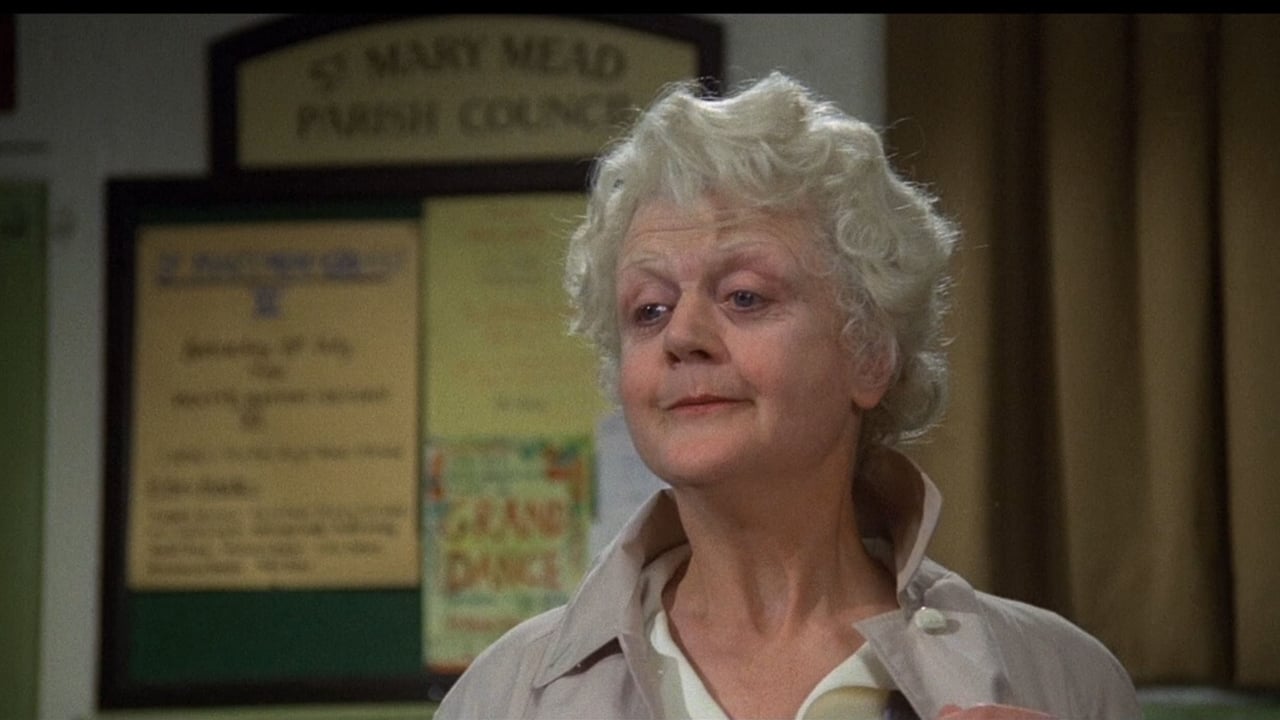
Irie212 My favorite film version of "The Mirror Crack'd" is this one, from 1980, but only because of my great admiration for Angela Lansbury, who plays Jane Marple. The same story was also adapted twice for British television, with Joan Hickson in 1992 and with Julia McKenzie in 2010, and a third time in India under the title "Shubho Mahurat." I have seen, and can recommend, both English versions, particularly the 2010 film, which has terrific performances by Lindsay Duncan and Joanna Lumley, and also wisely includes an important character who is left out of the Lansbury version, a woman named Margot, played by Charlotte Riley (more on Margot below). Other reviewers have commented on the all-star (and aging-star) cast of this version: Rock Hudson, Elizabeth Taylor, Kim Novak (each of whom would make only two more movies after this), and Tony Curtis (in the final quarter of his 96-movie career, and blessed with a strong, wise-cracking character). None of the four were consistently great film actors, in my view, but they were pros by 1980 and they handle this material well, especially in the scenes they are lucky enough to share with the divine Edward Fox, who plays Dermot Craddock, a Scotland Yard inspector and also Marple's nephew.This review is less about the movie, which is an intricately constructed murder mystery, baffling and thus satisfying. Instead, I wonder about one particular aspect of the work as a whole: how the audience is meant to feel about the murderer, her motivation and her justification. (The spoiler alert is serious because I just revealed the murderer's gender, and will soon specify her name.) I suspect I'm in the minority, but if the story had continued, putting her on trial, I'd have convicted her without a second thought, in spite of all the admiration and sympathy being heaped on her by the other characters and, I think, the creators, perhaps including Agatha Christie herself (I haven't read her original book).The murderer is the central character, Marina Rudd (Elizabeth Taylor), an actress who is trying to make a comeback with the help of her director/ husband (Rock Hudson). She is presented as a fragile character, barely holding herself together as the location shoot begins. The murder happens at a party they host, where she is introduced to various people including a flibbertigibbet named Heather-- an ardent fan whom she had encountered once, several years earlier, during the war. Within minutes of politely listening to her prattle about that first brief meeting, Marina realizes that Heather was the person who had accidentally exposed her to German measles while she was pregnant, a pregnancy that had not been easy to achieve, and indeed had followed the adoption of three children (one of whom is Margo, from the McKenzie film version, a daughter Marina so neglected that she doesn't even recognize her as an adult). Because of exposure to rubella, Marina's son is born with a neurological birth defect, the severity of the which is not specified; whatever it was, however, was sufficient to overwhelm Marina, who abandons him to a mental institution, has a nervous breakdown, and tanks her career. Now, meeting the innocent vector of the virus, her immediate response is murder. Marina poisons her within minutes of meeting her.It seems, as I said, from the dialog and the treatment of Marina Rudd by other characters, that we are meant to have considerable sympathy for her. Well, count me out. I was appalled at how monumentally self-centered she was-- first, to abandon her disabled child; and then decades later to murder the woman who had, in all innocence, exposed her to the rubella virus; and finally to murder one of her staff, Ella (Geraldine Chaplin), because she *might* have witnessed the poisoning. (A precis of the original Christie novel informs me that Marina also murders the butler because he, too, *might* know too much. This Lansbury version doesn't venture into the neglect of the three adopted children.)There is no arrest, no trial. Marina either commits suicide by overdose, or she is assisted in that by her husband, or possibly, her husband kills her with an overdose in hope of sparing her the charge of multiple homicide. It is ambiguous. But I do wonder, if she had survived and there were a trial, would you want the jury to convict her? I know I would.
B24 When at last I saw this old flop last weekend on itv3 in my London hotel room, I had difficulty identifying it as a vehicle for some of the biggest stars in the business until they popped up, one by one, in roles that were either cameos or tongue-in-cheek throwaways. It soon became apparent the acting as well as the direction was awful, but curiosity gained the better of me and I stayed on to the bitter end. I kept thinking at least one of the stars would do a memorable turn. Perhaps it was the wretched script or the bad lighting that prevented such a manifestation. The usual finesse of a Miss Marple film was nowhere in evidence. Unintentional comedy reigned, as in one poorly directed scene where a diminutive Edward Fox stood awkwardly side by side with looming Rock Hudson suggestive of a wedding between Batman and Robin. Elizabeth Taylor playing Elizabeth Taylor called out silently for the line, "Time for my close-up, Mr. DeMille!" A weak musical score was equally dismal.One wonders how these usually fine actors carried on regardless when it must have occurred to them they were clinging to a thin straw. They must have been very well paid.