Mjeteconer Just perfect...
Fairaher The film makes a home in your brain and the only cure is to see it again.
Abbigail Bush what a terribly boring film. I'm sorry but this is absolutely not deserving of best picture and will be forgotten quickly. Entertaining and engaging cinema? No. Nothing performances with flat faces and mistaking silence for subtlety.
Portia Hilton Blistering performances.
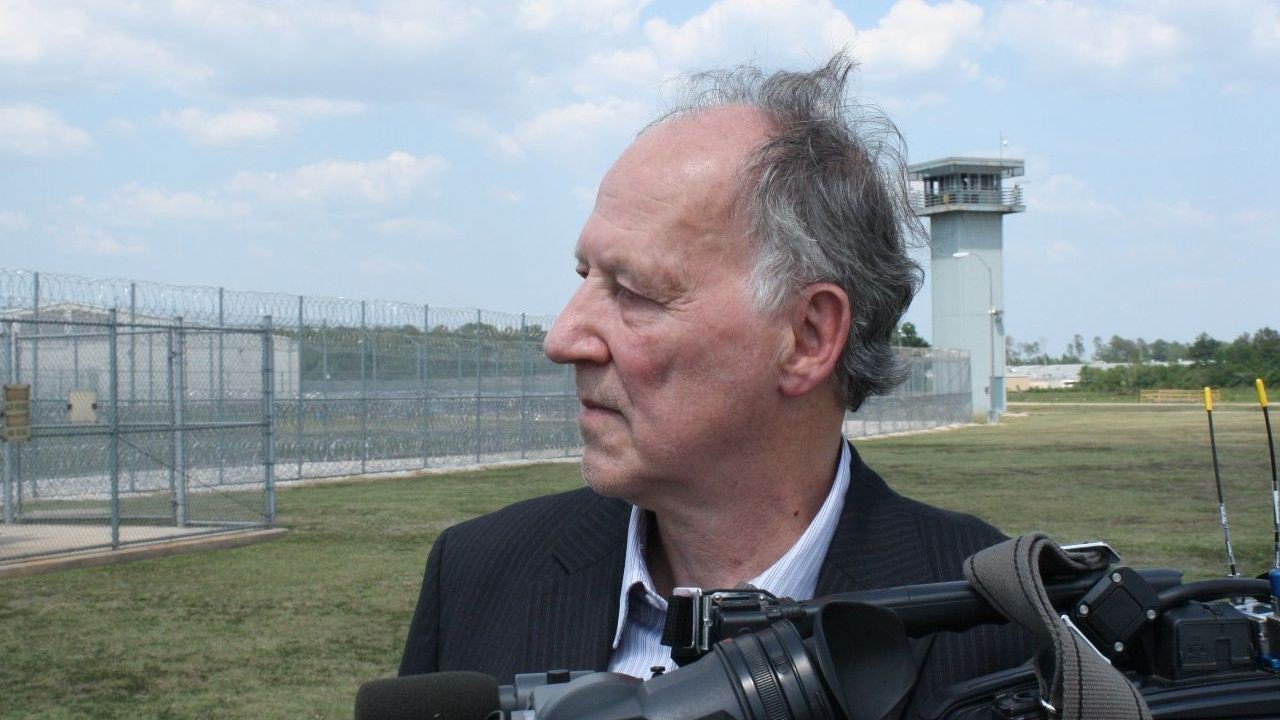
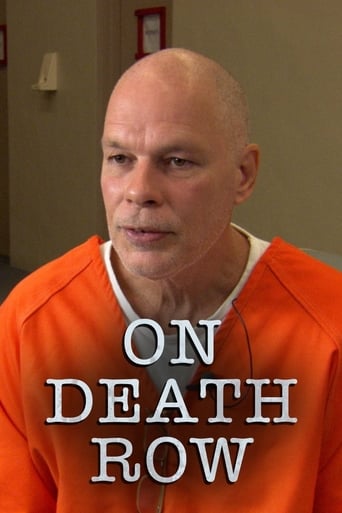
Sindre Kaspersen German screenwriter, film producer and director Werner Herzog's seventh short documentary which he created and narrated is a television mini-series in four parts which was produced by Creative Differences Productions, Spring Films and Werner Herzog Film Production. It was screened in the Berlinale Special section at the 62nd Berlin International Film Festival, had it's television premiere on Investigation Discovery and is a USA-UK-Austria co-production which was filmed at the Allan B. Polunsky Unit prison in Texas, USA.In this non-activist and non-political documentary which is a companion piece to Werner Herzog's 2011 documentary feature "Into the Abyss", the remarkable filmmaker goes even further into the minds of five convicted killers who are serving their sentences inside supermax prisons and makes it clear that he is not trying to humanize them, he doesn't have to like them and that what he is most interested in is what they feel about knowing how and when they are going to die. In a very unsentimental and straightforward manner, Werner Herzog instigates in-depth conversations with a woman named Linda Carty and four men named James Barnes, Joseph Garcia, George Rivas and Hank Skinner who very frankly tells him about their life on death row, their dreams, their prospects and the horrendous and meaningless crimes that has estranged them furthermore from life and brought them closer to death.Through insightful and rare interviews with family members, accomplices, defence attorneys, prosecutors, journalists and police officers, this nonfictional work creates multiple viewpoints and numerous unsettling, tragic and incomparable portraits of human beings which in some ways are given a prolonging of their last words. While notable for it's distinct cinematography by Austrian cinematographer Peter Zeitlinger and the obscure score by American composer Mark degli Antoni which emphasizes the poignant atmosphere, this informative and reflective examination of the absurdities of life respectfully puts the practice of capital punishment into a broader context. Another commendable achievement from a great storyteller.
evening1 I can think of no better guide through the bizarre world of capital punishment than this film's director, Werner Herzog.I've seen two other segments in this fascinating series and both were superbly done. This one, on Linda Carty, seems the weakest of the three.It centers on a horrific case, but Carty is neither interesting nor sympathetic. She is inarticulate on her own behalf and Herzog's questioning of her is uncharacteristically lame.The star of this segment is Connie Spence, an assistant district attorney who bears an uncanny resemblance in appearance and demeanor to Laura Bush. She sensitively speaks to the ability of Herzog to channel sympathy in the direction of a caged killer while the sufferings of the victim may fade from memory.Herzog also interviews a lawyer whose firm has done $2 million in pro bono work in hopes of getting Carty a new trial because her defense attorney failed to speak to Carty's DEA handler. This handler supposedly would have testified that Carty, who had served as one of his informants, was not the kind of person would would have hurt anyone.The lawyer states that if the jury had heard such statements it never would have given Carty the death penalty. Given the sordid facts of this case, I question that...----------"James Barnes"I just had an opportunity to view the segment on multiple killer Barnes. It was interesting, but, again, I feel Herzog could have done more here. The interviewer succeeds in bringing out the oddness of Barnes but fails to ask questions that are begged. For example, why on earth did Barnes leave all his clothing outside of Brenda's home? What was going on in his head as he lay in wait in her closet as she did chores and watched TV?Barnes grew up in an abusive home and it's implied that he sexually abused his twin sister. He hurt animals and his rap sheet was long. What could have been done to prevent his horrors? I believe if Herzog had asked this question to Barnes and others in this segment it would have been a much stronger entry in the series. Wake up, my man Werner!
lattar1 I watched the three episodes of this series only days after watching 'Into the Abyss'. While I found the full length feature documentary slightly boring and even more disappointing, the same can not be said about 'Death Row'.Herzog, the creator of this series, does not go on a rampage to prove somebody's innocence, nor does he advocate loudly his opinion about capital punishment. Instead he creates an opportunity to the viewer to get to know the person condemned to die. The emphasis is not about what is right and wrong, or who did what. Its about the person in death row, as well as other human aspects involved. Proper weight is given to the case's individual details, and at least my curiosity about the evidence and what occurred in the crimes was satisfied.I strongly recommend this series to people that find the theme at least mildly interesting. This series is politically some what neutral in spite of Herzog opposing capital punishment. I found some of the subjects - not all - likable, and felt strong compassion for them. This is a special mini-series and I'm very glad I watched it, even though I was disappointed by 'Into the Abyss'.
fustbariclation Capital Punishment is such a primitive and savage activity, it's a wonder any practitioner or supporter is considered house-trained.To say that I'd been 'looking forward' to Werner Hertzog's film would give the wrong impression. I can say that I'd been anticipating watching it with interest for several months and it, so far, has been excellent, if disturbing.The cruel and unusual torture involved in Death Row is made very clear in the first episode. It's, to me, evident, that, even if the man being interviewed had committed the murders, and done them in cold blood, rather than when out of his mind, the 17 years of torture he has been forced to suffer has more than covered any punishment he deserved. Jeremy Bentham observed that punishment should always be in proportion to the suffering that the crime caused, it is hugely unjust, and wicked to punish with many times over the amount of pain and suffering caused. It is criminally uncivilised that the authorities have been unable to see this and have persisted in treating this man in such an ghastly, horrific and savage manner, for such an interminably long time.Of course, Herzog is not naïve. He's chosen a very unusual inmate to make the case. Not only is the inmate articulate, sensitive, mainly rational, and intelligent (though not always sensible, as is made clear!), but he's white (most people executed in the US are black), and was convicted as an adult - and there's some doubt (supported by the Supreme Court) of his guilt. I supposed Herzog looked for a similarly white, articulate, possibly guiltless, murderess, but was unable to find one. I think that this is all quite fair - if people are such moral imbeciles as to think such torture and execution acceptable, then any means of persuasion is legitimate (even if, ultimately, unlikely to succeed). After all, it is wrong to execute anybody, not just wrong to murder, judicially, people like us... Alhough one wonders a bit about mass-murderers of the Mao, Pol Pot, Tony Blair, George Bush, Stalin variety - the question of punishment for causing such massive pain, suffering, mutilation and death is more difficult in the cases of such extreme monsters, it is still true that it would be wrong to torture and execute them - after all, stringing Mussolini from a lamppost hasn't done anything to deter murderous fascists since then..The film also makes a good case for the profound depth of the depravity of executioners. Is it possible to imagine any human activity more depraved than operating a human slaughter- house? Particularly one attached to torture chambers that mete out incessant, cruel treatment, over decades, against human beings. Even soldiers have the merit of arguing that their victims can, sometimes, fight back. At least DIY home murderers can argue that they seldom, even prolific serial killers, manage to kill 200+ people a year, and that they do it for passion, or serious money - not just 'extra pay'.