Raetsonwe Redundant and unnecessary.
Fairaher The film makes a home in your brain and the only cure is to see it again.
BelSports This is a coming of age storyline that you've seen in one form or another for decades. It takes a truly unique voice to make yet another one worth watching.
Tayloriona Although I seem to have had higher expectations than I thought, the movie is super entertaining.
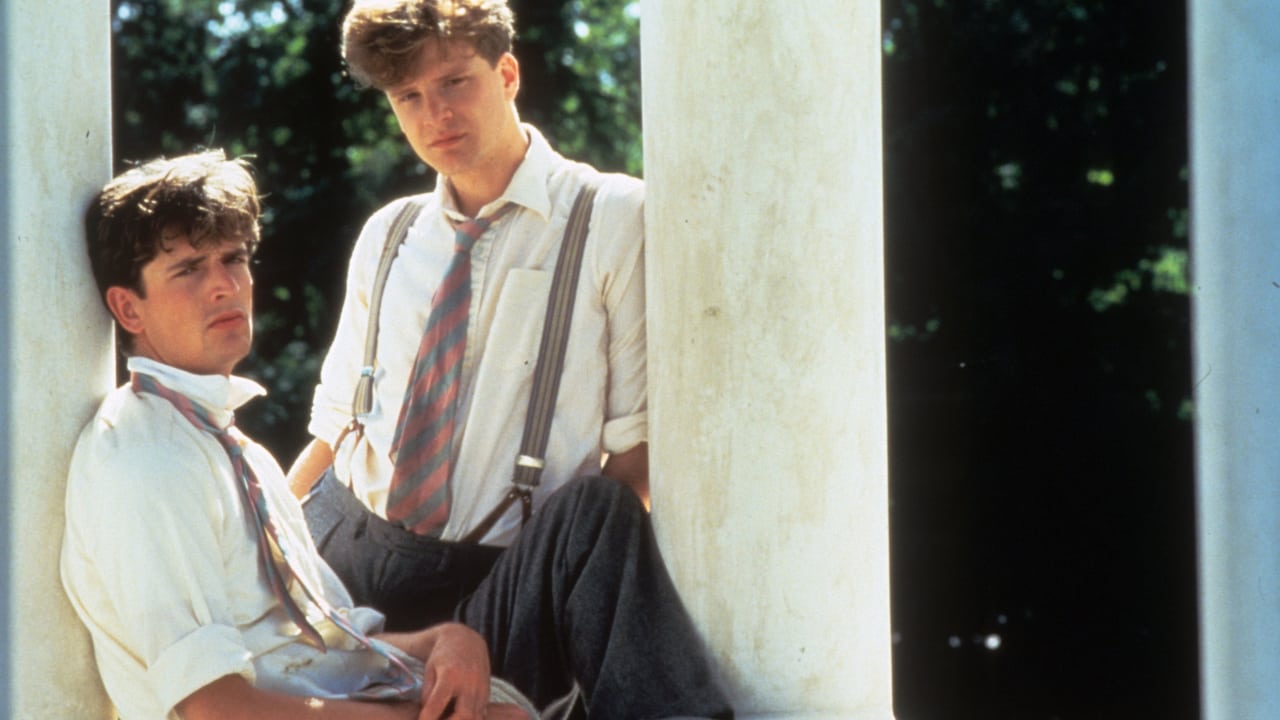
James Hitchcock Although the closing titles contain the standard "all characters are fictitious" disclaimer, the scriptwriter Julian Mitchell has never denied that his main character Guy Bennett is a thinly-disguised portrait of Guy Burgess, one of the notorious Cambridge spy ring who acted for Soviet Russia. The film is mostly set in an English public school during the 1930s, based on Eton where Burgess was educated. (What shocked British society most about the spy ring was not so much the treachery of its members as the fact that most of them were from well-off Establishment families and educated at the country's most prestigious schools).At the heart of the film is the friendship between Bennett and another student, Tommy Judd. Although they are very different in personality, they are drawn to one another because both, in their own way, are rebels against the system. Judd, a committed Marxist, is a rebel with a cause who despises the school and all it stands for. Bennett is a rebel without a cause whose attitudes are rather contradictory. He can see the absurdity and hypocrisy of the public school system and of the Establishment in general, but still wants to benefit from that system. His greatest ambition is to become a "god", school slang for a senior prefect, regarded as the school's social elite. Much of the plot revolves around the machinations of various senior pupils to achieve this coveted distinction; Judd is virtually alone in disdaining it. At this stage Bennett is not actually a Communist; when Judd quotes Lenin's attack on Karl Kautsky, spouting a lot of Marxist jargon in the process, Bennett replies "Oh, that's bad!", but in a sarcastic tone of voice which implies that he neither knows nor cares what Judd is talking about.Bennett is also trying to come to terms with his homosexuality. He is engaged in a sexual relationship with another boy, James Harcourt, and there are indications that he has engaged in similar behaviour with others. The school's attitude to homosexuality, in fact, is fairly schizophrenic. Bennett and Harcourt are by no means the only pupils involved in gay relationships; indeed, another boy in Bennett's house has recently committed suicide after being caught in flagrante with his lover by a teacher. The greatest concern, however, of the staff and most of the prefects is the need to avoid scandal; gay relationships are quietly tolerated provided they are kept discreet. When one prefect, Fowler, attempts to crack down on homosexuality, motivated by Puritanical religious zeal, he makes himself very unpopular with his fellows, who fear that he might uncover things best left hidden. Bennett represents a challenge to this system of organised hypocrisy, not because he is gay but because he is temperamentally incapable of discretion. The greatest sin is to get caught, because that would force the authorities to take action they would prefer to avoid.If scandal does leak out, the authorities prefer to insist that the boys were merely experimenting or going through a youthful phase. Even the otherwise nonconformist Judd takes this line. (Unlike some of his colleagues, he is firmly heterosexual and regards homosexuality with bemused incomprehension). Bennett, however, realises that being gay is an inescapable part of who he is, not a mere passing fad, and that he will never love women. The film's implication, in fact, is that Bennett/Burgess spied for the Russians not because he was a convinced Communist but as an act of revenge against the British Establishment for rejecting him on account of his sexual orientation. He never asked himself whether his sexuality would be any more acceptable to the Soviet Establishment than it was to the British one. (By the time the film was made in 1984, homosexuality had been legalised in Britain but remained strictly banned in Russia).On one level the title "Another Country" is derived from a line in the hymn "I Vow to Thee, My Country", which we hear being sung, although on another it refers to the Soviet Union, the state to which Judd and ultimately Bennett give their loyalty, with perhaps a hidden reference to Orwell's theory of "transferred nationalism"- the idea that supporters of Stalin and Soviet Russia were motivated by the same type of uncritical, unthinking nationalism as flag-waving British jingoists, with the difference that their loyalty was transferred from their own country to a foreign one."Another Country" was made by Goldcrest, the company which has become most closely associated with the great British cinematic revival of the eighties, but unlike some of their other productions it has largely disappeared from view over the last thirty years. In 1984, controversy over the spy ring was still raging. Leftists, who might under other circumstances have been sympathetic to Communism, savagely attacked the spies as prize examples of upper-class treachery and corruption, whereas some rightists, most notoriously Peregrine Worsthorne, attempted to defend them on the grounds that loyalty to one's beliefs could be more important than loyalty to one's country.Since the end of the Cold Way we no longer care as much about the Cambridge Spies as we once did, which may explain why "Another Country" can seem unfashionable these days. It is, however, a very good film, distinguished by an excellent performance from a young Colin Firth as Judd, surprisingly likable despite his extremist views, and an even better one from Rupert Everett as the floppy-haired, nonchalantly rebellious yet secretly vulnerable Bennett. It also has a lot to say about matters of perennial importance- loyalty to country, loyalty to friends, political idealism and the rights of sexual minorities. An intriguing and thought-provoking film. 8/10
Rick James Whatever others think of the superficiality of the story, I can't think of another movie that explores so provocatively the interaction of sexuality and politics/ideology. We have had stories that show characters blackmailed or led by passion to deny their beliefs, but here we have a character whose alienation from classist, homophobic, hypocritical upper-class English society in a boarding school that can't but be Eton proceeds to betray his country. Those who criticize the script seem not to appreciate the sharp critique of English society in comments like "They are not empire builders, the are empire rulers." Yes, there is snarkiness and bitchiness, but that goes with the territory, underground public-school gay underculture of the period. The film is a landmark in frankness and insight into the psychology of treason. Burgess, McLean and eventually Blount carried out the most destructive spying of the period, and they were inspired not by greed (they were after all insiders) but by principle, however mistaken that was, and as the movie shows, by social and sexual ostracism.
sandover As far as I can tell, this sums up the lucid moral of the film, for to brush what the film actually contemplates is a risky business. Perhaps it achieves a discreet, demonstrative style in the scenes with the juniors, who may actually be the true Marxist, lilliputian counterweight to the ideological tirades, a style which is best allied with the performances' muted quality. As another reviewer shrewdly noted, one wonders if Colin Firth was ever a boy, that is how haunting a note he strikes, and with a sneer in his voice that maybe outshines even Michael Cane's, given his age. Rupert Everett turns a cautious, elegant performance; have we actually come to appreciate his distinct comic, perhaps signature Wildean, timing (well, better serving him in dramatic films)? But what will stay with me is the first amorous meeting between Benett and Harcourt, the first lines spoken and framed ideally by Elwes' flushed face and the - already enamored - slight twitches that betray him and convey a feeling of unspeakable beauty, a feeling of first -.Excuse me for being rhapsodic, excuse Cary Elwes for afterwards portraying an inexperienced, somewhat floppy youth (yet with a charismatic aura due perhaps to the fact that this is his first role, and with a platonic passivity that retains all the ambiguities of this kind of love). Forget the confusing matter of the film's ideological, biographical, theatrical or what stitches, see how it frames first love (we only come to see a handshake - has a handshake ever been so evocative? - and an embrace, not a kiss, nor a caress) in the premises and remember how wisely the director makes James Harcourt exit: he does not reciprocate Everett's distant salutation.If the film achieves an intuition, I think it is this grim one.Along with stating that thick makeup of Victorian proportions cannot convince the youthful body underneath to be old enough, or irrelevant enough in the U.S.S.R..
kdrobison This could have been a great film, but was only an okay film. I could make many comments, but I just have a question. The final scene (one of only two times we have to see Rupert embroiled in that awful makeup that renders him unable to move a single muscle in his face) ends abruptly and goes to credits. Ordinarily I would chalk this up to a lame ending, which it may very well be. But the rented DVD I have lists the movie at 107 minutes. The actual playing time is 84 minutes. Could be a typo, I guess, but it's way off. Plus, movies that are 90 minutes or less are often of the slasher variety, not the drama variety. If you have any thoughts or if I'm just out of my mind, e-mail me privately as I probably won't check this often.