Jeanskynebu the audience applauded
Humaira Grant It’s not bad or unwatchable but despite the amplitude of the spectacle, the end result is underwhelming.
Mathilde the Guild Although I seem to have had higher expectations than I thought, the movie is super entertaining.
Zlatica One of the worst ways to make a cult movie is to set out to make a cult movie.
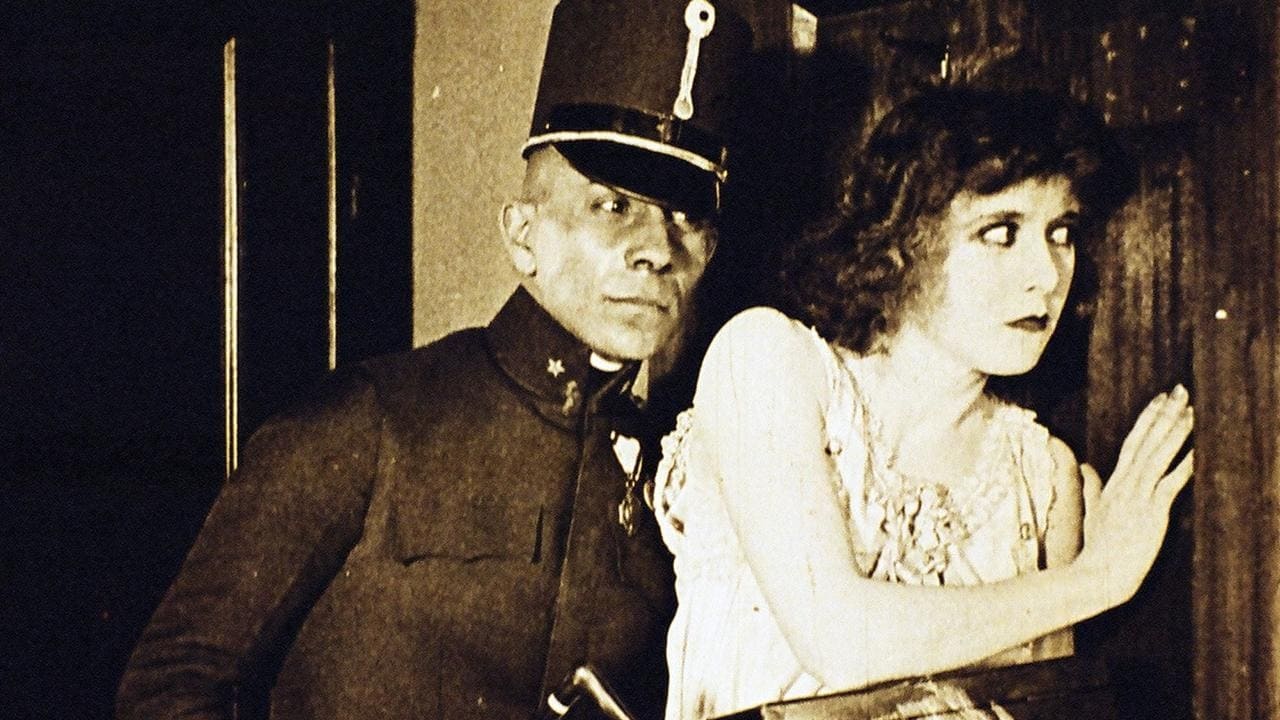
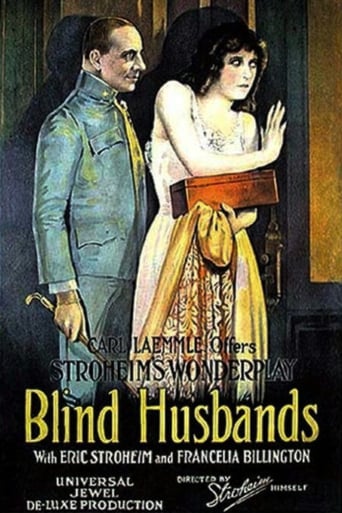
MissSimonetta As a director/writer, Erich von Stroheim is a bit of an acquired taste. A great deal of his work revels in the grotesque and in being rather long-winded, which is why Blind Husbands (1919) may be the most accessible of his films, along with The Merry Widow (1925).A meditative piece on love and fidelity, Blind Husbands follows the story of a marriage which has grown cold due to the husband's workaholic nature. As they vacation in the mountains, the wife is pursued by a lecherous lieutenant who, when unable to get her in bed, urges her that her husband does not love her and entices her to run away with him.It's the stuff of melodrama to be sure, but everything is so underplayed and von Stroheim engenders a great deal of atmosphere into the picture. The only flaw would be the finale, where everything is resolved much too cleanly and in the typical melodramatic fashion. It's a rather childish ending to an otherwise mature movie.
oOgiandujaOo_and_Eddy_Merckx This is a review of the Austrian version of the film, which is available on the R2 Edition Filmmuseum DVD. I believe it is also available in the States on Kino DVD in the truncated American version that has a different sentiment.Blind Husbands is a story about folks holidaying in the alps (Cortina specifically). The main characters are a famous American surgeon, his wife Maguerite, and Leutnant von Steuben, a German military man (the filmmuseum English subtitles are a bit misleading here because they translate the intertitles referring to him as an impostor, whereas I believe von Stroheim's intention was to portray him as someone unfit to wear the uniform rather than literally not allowed to wear it). Von Steuben is played by von Stroheim himself.He's meant to be a philanderer of married women. He looks the part, excepting that he is actually very short, shorter in fact than Maguerite. The world may have changed a lot in ninety years, but I doubt the women back then were too different from women today who are generally unable to take the advances of men shorter than themselves seriously.I'll give the world and the female race the benefit of the doubt for the movie's sake. Von Steuben is after a clinch with Maguerite, but he's already had a squeeze with two of the hotel serving girls by the time he gets round to her. He's got a soft target really, because the husband is much too self-involved to notice that his wife is feeling lonely and in need of rekindling. Obviously where the title "Blind Husbands" arises from.There's quite a lovely dinner scene outside the hotel in Cortina at night, there's all these paper lanterns in lines interspersed with the permanent hotel lanterns, very pretty really. Maguerite excuses herself from the hubbub and goes inside to play the piano. Whilst sat at the piano we see her head shot against a totally black background, quite an unusual shot for a film of any era. It's at this point that she appears totally alone, not just lonely, but alone. Back to the normal shot and Steuben has sidled in. He picks up a violin and starts to play a duet. What a powerful thing to do to one in such a suggestive frame of mind! Part two of the plan is to buy her the marquetry box that hubby was too busy to notice that she wanted. It's apparently two hundred years old, the design on the lid is all lozenges and grains, really reminded me very much of a Matisse type pattern, we get a lovely close up of it.As it happens there are another two shots against a dark background, one of a bell ringing in the bell tower (to mourn the dead) and one of von Steuben pointing his grubby finger at Maguerite.Most of the film basically concerns the von Steuben/Maguerite cat and mouse game. Can't blame him for chasing Maguerite really, my favourite shot of her was her wearing these lovely antique sunglasses with wildflowers in the back of her alpinist hat band. The movie is all shot really quite sympathetically, I'd almost call it realism, a surprising term for a 1919 film! According to others the level of mise en scene is apparently not up to Foolish Wives or Greed standard, but I'll go with it on an absolute basis.If you see the movie as containing realism, then the ending is a bit of a cop-out, a sop to dramatic cliché. However we'll let Erich off as it still kind of works. The movie turns into a bit of a bergfilm at the end, American superman, surgeon, strong, weakling German braggart, this being totally exposed as they climb the mountain, having been rather sotto voce before.The only silly part of the film concerns the shadow of an eagle, which is blatantly produced by a crude silhouette hanging on the end of a wire (unless eagles can fly backwards), yikes! Other than that though I thought the movie was brilliant.
electricsheep-1 A basic marital morality tale, enthused with Stroheim's lust for self-loathing. He plays an over-sexed, effete, lizard of a Prussian Officer, named Von Steubens, who zealously seeks to dishonour the wife of an American doctor holidaying in an Alpine retreat.Interestingly, Stroheim is said to have virtually stalked Carl Laemmle, the head of Universal, in order to get his story, The Pinnacle, made into what would become Blind Husbands. Not the least hint or sign, then, of the crazy, obsessive auteur, a part that Stroheim would pioneer! As a director, Stroheim does have a wonderful visual eye (scenes of men climbing mountains etc.). There are also some very inventive shots, such as when the wife is looking at her practically impotent husband, the doctor, sleeping in bed, via a mirror, and then sees a young couple at the lodge in place of him, completely in love, before going back to the snoring doctor.Moreover, the English actor who would go on to play McTeague in Stroheim's much greater, later, work: Greed, here plays a mountain guide. He is a symbol of the people of the mountains, strong, pious and devout, a complete opposite to Von Steubens' decadent Officer, who uses his cultural refinement only to guarantee his baser purposes, wooing the local peasant girls with poetry for instance, and wooing the doctor's wife with a violin.But that's the problem with film. Although the characterisation isn't completely two-dimensional, the esteemed doctor, for instance, shows envy and hatred. His wife also admits an ambivalent interest in Von Steubens unwholesome charm. But Stroheim seems to idealise these mountain people from the get go, which is stupid romanticism. Anyone who has such romanticism should read An Alpine Idyll, a short story by Hemingway.Still, an interesting early Stroheim.
Cineanalyst The story is simple and unoriginal: a love triangle, plus man's determination to conquer nature. But, this early effort by director Erich von Stroheim displays great restraint, especially for a filmmaker who would become notorious for excess. His films, such as "Greed" (1924), are better known for their production and post-production histories than for their actual merits. He would shoot an excessive amount of footage for films of extraordinary length, which the producers then butchered. That's not the case with "Blind Husbands", though; this one has a normal runtime.It also features the familiar Stroheim touches on a smaller scale. The acting is rather subtile. Stroheim introduces his typical role as a villainous Teutonic womanizer, with a scar, a monocle and a history of military service--"the man you love to hate". Here, he's the other man. Furthermore, the mise-en-scène takes precedence over camera movement or editing. The décor is detailed and occasionally allegorical to the melodrama. Attention to lighting is also evident. "Blind Husbands" is sensational and too contrived and ruminant at times, but, for the most part, the simple story is harmonious with the restrained, yet detailed, film-making.