Kattiera Nana I think this is a new genre that they're all sort of working their way through it and haven't got all the kinks worked out yet but it's a genre that works for me.
Selfmageob This was not a good film.
TrueHello Fun premise, good actors, bad writing. This film seemed to have potential at the beginning but it quickly devolves into a trite action film. Ultimately it's very boring.
Marva It is an exhilarating, distressing, funny and profound film, with one of the more memorable film scores in years,
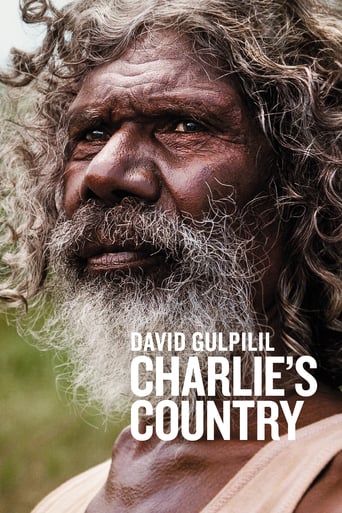
manders_steve Rolf de Heer, director of this film, has a real connection with Australian Aborigines and the really challenging circumstances they find themselves in. David Gulpilil, one of Australia's leading Aboriginal actors, was in the dance troupe that entertained Queen Elizabeth II when she opened the Sydney Opera House in 1973. But now, in this semi-biographical film, back in his country of Arnhem Land in the eastern Northern Territory, he's finding it really hard to fit in. No matter what he does, it isn't right. White man junk food: no good. Going bush to go hunting with a gun: illegal. Make a traditional hunting spear: illegal too – a dangerous weapon. Help the police track criminals: promises go unfulfilled. Doing the best you can for your family: unappreciated, at best. So Charlie heads off and goes bush. And there the challenges continue to pile up. It's an incredibly insightful yet accessible examination of what has proved an insoluble problem for Australia for decades. Pretty much since the British settlers arrived here in the late 18th century and declared that the land was unoccupied (known as Terra Nullius) this situation was set up. Around a third of the film is in native language with subtitles (possibly David's own Yolngu tongue) and this adds to the convincingness of this film. And it has some really funny moments that add to approachability.As a descendant of the British settlers of this country, I have little ideas about what should be done to help the original human inhabitants of our country effectively. What we've been doing isn't working. This film points to the multi-faceted, multi-dimensional problems, but it doesn't find answers either. Maybe there aren't any, except time. Long time - generations. Anthropologists say Australian Aborigines have been here for at least 40,000 years, maybe up to 60,000. Imposing most of western civilisation's development onto an incredibly long lived culture in less than 200 years has obvious challenges. I think this film gives an authentic insight into the issues, and highlights that broadly workable solutions have yet to be found, in a genuinely entertaining way.
Lee Eisenberg Aboriginal Australian dancer David Gulpilil has appeared in a number of movies over the years: "Walkabout", "The Last Wave", "Crocodile Dundee" and "Rabbit-Proof Fence" are among his most famous roles. His performance as the titular character in Rolf de Heer's "Charlie's Country" might get remembered as his most important role. Gulpilil plays a Yolngu man living on a reservation with a collection of other Aborigines. Even though the army doesn't enter the area to mow people down, it's still impossible for the people on this reservation to live traditionally, as the police confiscate any possession deemed to be a weapon. So then Charlie decides to move out into the bush to live how he wants."Charlie's Country" will likely be the only Yolngu-language movie that you will ever see. In fact, it's the first movie that I've ever seen spoken mainly in an indigenous Australian language. The presence of words adopted from English is an ever present example of how much Australia's white population has impacted the indigenous population.The movie should serve as a reminder of how Australia's indigenous population lives. Once the island's only inhabitants, they're now 1% of the country's population (but 40% of the prison population). Unemployment and alcoholism are rampant - Charlie even mentions how the white people introduced alcohol and ganja to the Aborigines - and it was only in the last decade that Australia's government offered an official apology for stealing Aboriginal children to get raised as servants for white people. Really good movie.
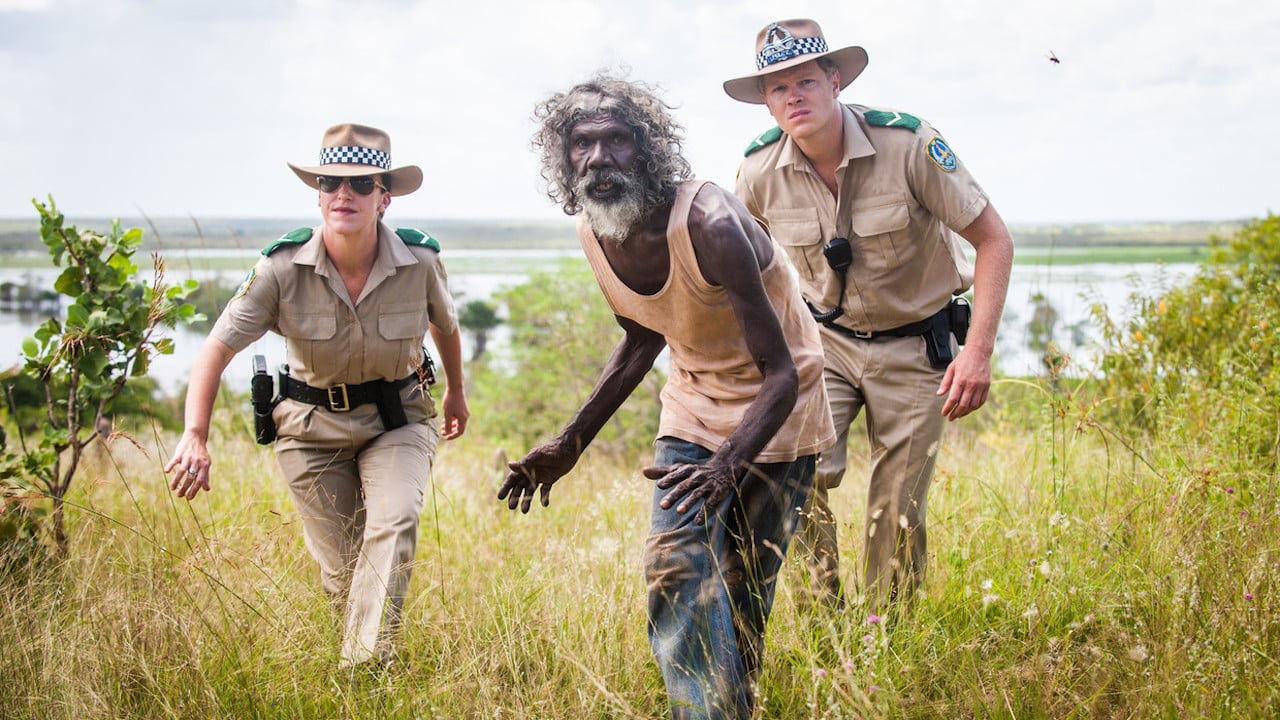
Howard Schumann Charlie (David Gulpilil), an aging Native Australian living in the Northern Territory, is broke. He does not have a house. He is also hungry and his spirits are low as a result of the erosion of his way of life. Recipient of the award for Best Actor at the 2014 Cannes Film Festival, David Gulpilil is a dominating presence in Rolf de Heer's Charlie's Country, the third film in their collaboration (The Tracker, Ten Canoes). Although much of the film is improvised, Gulpilil co-wrote the script with de Heer while he was serving a prison term. Though the film reflects the actor's personal experience, its theme of the struggle for human dignity in the face of cultural marginalization is universal.Charlie and Officer Luke (Luke Ford) have a good relationship and their banter begins the film. Charlie shouts at Luke, "You white bastards!" to which Luke yells back, "You black bastard!" The fun stops, however, when the police enforce the law preventing Charlie from hunting and fishing. They take his spear because it is considered a dangerous weapon and confiscate his gun because he does not have a weapons license. "I'm gonna shoot it, not drive it!" he tells Luke. While the police are impressed with his tracking ability, Charlie receives no compensation at all for his help in tracking drug dealers.As he sees a member of his community being flown to a hospital far from his land, he makes a decision to return to the bush, to the ways of hunting and food gathering that he knew as a boy. While his body language reflects a new freedom, there is also a deep sadness etched on his face as he realizes he can no longer cope with the physical demands of living in the bush. After a heavy rain, Charlie comes down with pneumonia and has to be airlifted to Royal Darwin Hospital, often a final destination for Aboriginal People. After he leaves the hospital on his own without being released he joins a group of homeless drifters who do nothing but drink and smoke the whole day.After an altercation with the police, Charlie is sent to prison where his hair and face are shaven, looking old beyond his years in the film's saddest moment. All Charlie has left are his memories, especially the one of dancing for the Queen at the opening of the opera house in Sydney. Though there are highs and lows in the film, what is constant is Charlie's sense of identity and his love of his native land and traditions. Though there is a message and the film does make a strong political statement, it is not a one-dimensional screed but a nuanced look at the conditions Native Australians face and their struggle to retain their values in the face of white colonization. Marked by Gulpilil's towering performance, Charlie's Country ultimately teaches us to dance to their rhythm.
Likes_Ninjas90 Charlie's Country has a lived-in lead performance, complimented by clean photography, but does the film's love for its central character diminish its ideological objectivity? The socio-political issue the film takes aim at is the restrictions brought upon by "the invention" or the Northern Territory National Emergency Response. Charlie (David Gulpilil) is living in Ramingining, an indigenous community in the Northern Territory, which is a dry area. Charlie is pestered for his welfare payments by his relatives in the area. Although he provides for people, he feels suffocated. He wants his own place, away from all his relatives, but he is told he already has one. He is also frustrated by the restrictions imposed by the local police (one of which is played by Luke Ford). Charlie decides to return to traditional living in the bush. Not only does this make him extremely ill but it also leads him into a new destructive life path while his friends have either adapted to the modern world or they are dying. It takes great sensitivity to write or film a story about cultural problems in any country, given the delicacies of these discussions and the emotions they evoke in people. One can only imagine the difficulty of approaching this subject as an outsider. For a Dutch-Australian filmmaker, who moved from the Netherlands to Sydney when he was eight years old, Rolf de Heer has done remarkably well to make several films about Aborigines. Charlie's Country marks the third part of his indigenous trilogy after The Tracker and Ten Canoes. Each of these films has starred David Gulpilil and although this film is not an autobiography it does contain some biographical elements of this gifted but troubled actor. David Gulpilil has said it is "authentic to my experience of these things". It was his history with alcohol and violence that launched the concept for the film. De Heer visited him in gaol and decided to provide Gulpilil with a film project that he hoped would save his friend from self-imploding. The film's script is co-credited to Gulpilil himself and this has made Rolf de Heer conservative in his approach to the subject matter. Partially a redemption story, the film argues against the restrictions placed on the community by adopting Gulpilil's own values and viewpoint against colonisation. Rather than looking at contextual details like why the alcohol restrictions are emplaced, the film focuses on the lack of money, the poverty and bans on alcohol and traditional methods in these communities. What is troubling about the film is the simplicity of many of these arguments. One example is when Charlie's unlicensed gun and spear are confiscated from him by the police. "I'm not a recreational shooter. I'm hunter", he argues. Would the situation be different for any white person using an unlicensed weapon? In reflection, it is also an uncomfortable scene given that in real life Gulpilil was charged for wielding a machete in a confrontation before being acquitted. By focussing dominantly on the welfare payments and poverty, the film forgoes an opportunity to show the destruction of alcohol in these communities. Surely the burden of alcohol is part of a universal mirror that could be held up to all Australian societies today. Using a moderately light tone, the subject of intoxication is approached through comedy. Some of the film is quietly funny. One gag shot frames Charlie and his friends drinking in front of the alcohol prohibition sign so they can't be punished. Simultaneously, isn't the joke also soft- peddling the seriousness of the issue? The most damaging of any alcohol related crimes in the film is when Charlie buys grog for a black woman who has been banned from drinking. Out of anger he smashes the windscreen of a police car. Gulpilil's own alcohol related crimes were domestic related and more serious and violent. He served time in gaol after he fractured his wife's arm by throwing a broom at her. When de Heer visited him the director said that he was looked after. The film's version of his incarceration isn't subtle. It lunges desperately for our sympathies. The prison sequences starts with a medium close-up shot similar to the Stanley Kubrick's Full Metal Jacket where Charlie has his head and beard shaved off, followed by repeated images of slops being served and the camera scanning pedantically over the top of a barbed wire. Yet if there is any reason to see the film it is for Gulpilil's performance which is the cornerstone of the entire story. Using his background and the autobiographical details, he completely dissolves into the character but also shows us just how effortlessly he can inject humour and emotion onto the screen as well. He is an engaging presence and undeniably talented. He is also one of the reasons why the film is never short on personality because the decision to have long shot durations and unbroken takes is mostly justified by his purposeful facial expressions. We can see the internal conflict as he watches other people sink by him, forcing him to reconsider his future. I would have liked to have seen this fine performance attached to a less compromised film though. Although the ending features a beautiful dance it is also merely a short-term resolution for Charlie's problems. Nonetheless, perhaps the very sight of this actor taking his opportunity with both hands will be the most significant message for anyone watching this film. A life salvaged, temporarily, by art.