BlazeLime Strong and Moving!
Pluskylang Great Film overall
Voxitype Good films always raise compelling questions, whether the format is fiction or documentary fact.
Geraldine The story, direction, characters, and writing/dialogue is akin to taking a tranquilizer shot to the neck, but everything else was so well done.
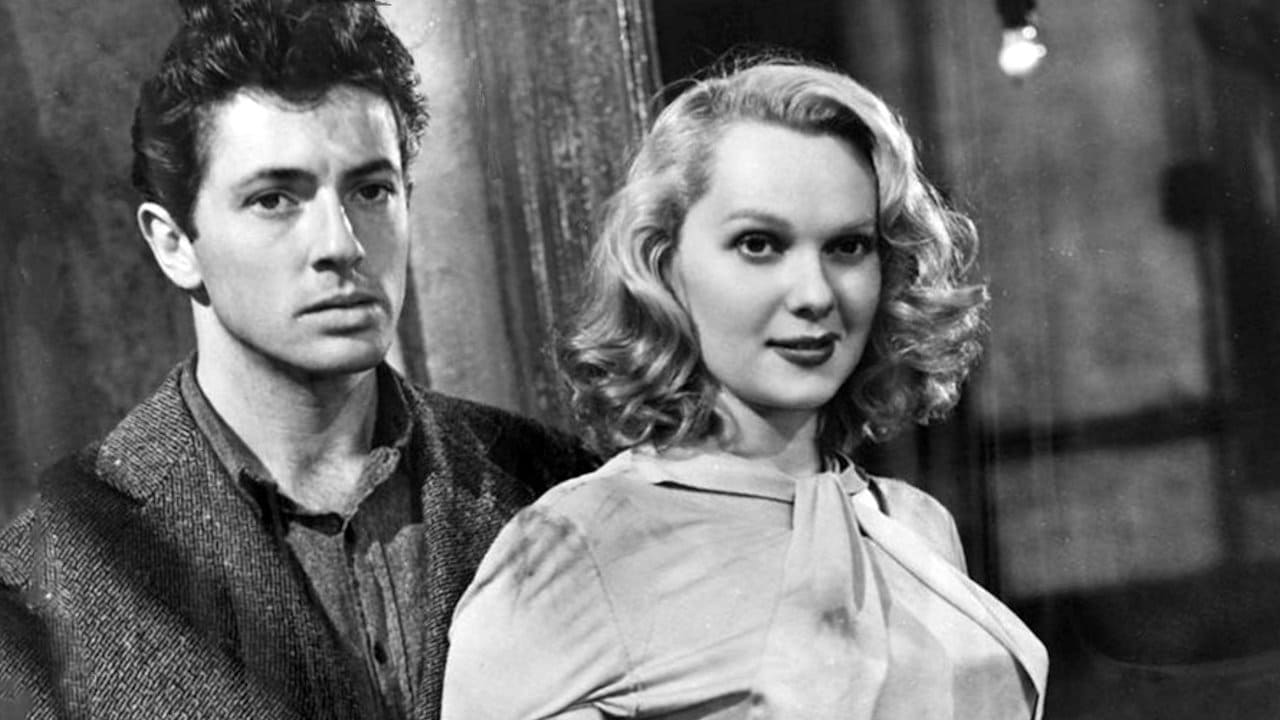
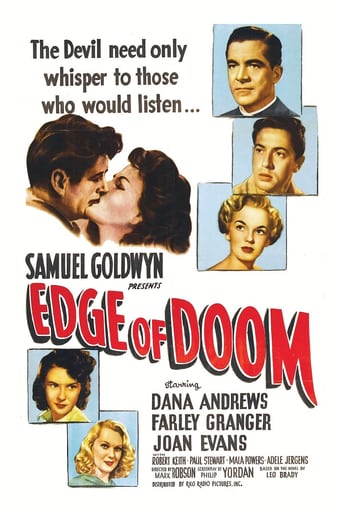
zetes Excellent, truly depressing, forgotten noir starring Farley Granger. He plays a young man who's had an incredibly difficult life: he has grown up poor. His father, when he was a teenager, committed suicide after committing a robbery. The church denied providing any services for his father and basically told Granger and his mother that the guy was doomed to rot in Hell. Granger's mom was too religious to give it up, but Granger holds a powerful grudge for the church. The film opens with his mother dying, and Granger has to honor his mother's final wishes by going to the church to get her a funeral. A big one, he insists, because she never had anything good in life. Unfortunately, the priest his mother trusts (Dana Andrews) is out on a call, and he is forced to deal with the same priest (Harold Vermilyea) who denied his father a proper burial. This agitates Granger so much, he ends up committing a horrible crime. Andrews is quicker to understand the truth than the police, so he tries to get Granger to turn himself in before he gets himself in more trouble. Both Granger and Andrews are very good in their roles, and Mark Robson, who previously directed several horror films in the Val Lewton cycle, does an excellent job ratcheting up the suspense. This was kind of a bomb on its first release. It perhaps was too dark, even for the genre. Farley Granger didn't think it was very good, but he was wrong. He should have been proud of it. You can find this film right now on Netflix Instant. It was on VHS, but has never been on DVD.
MartinHafer This film was told by veteran priest Dana Andrews to a young troubled priest. The tale was about a real-life murder and how Andrews came to become involved in counseling this young killer. The intent of the story was to make you feel sorry for Farley Granger and understand his motivation--something I just KNEW would be a major thrust in the film since Farley made a habit of playing young "good" men who somehow go bad (as in ROPE and THEY LIVE BY NIGHT). The problem with this whole angle, though, is that apart from Granger's poverty, I didn't feel the least bit sorry for him or understand the pointless murder. Granger's character was very whiny and weak and frankly he disgusted me with his petulant manner throughout the film. Now Andrews was excellent as a priest--forgiving, kind and yet tough when he had to be and I could understand why, as a priest, he worked so hard to save Granger's soul--even if Granger was a childish idiot. In fact, aside from Granger's character, the film was very good but the general unlikability of him really did a lot to deaden the impact of the film. A nice try to make a film with a social conscience, but it just didn't fly and is just a time-passer.
songwarrior52 My dad wrote the book that EOD is based on. It is interesting to me that a film that was declared a resounding failure still elicits some interesting commentary. The view that it is possibly the most depressing noir-type film around sounds like a huge compliment to me, given what noir is always striving to do, and indeed it IS a dark film (which makes the above comment about the Stradling cinematography kind of puzzling). Also, the IMDb trivia statement that the film has never been shown on TV can't possibly be true, since I remember seeing it on TV when I was a teen.The novel Edge of Doom used a Crime and Punishment narrative style to tell a contemporary murder story revolving around poverty in a large American citythe template was Philadelphiaand to raise issues about how devotion to church alone can not solve the ills of a modern society. The subject matter is indeed bleak, and indeed ahead of its time. It's certainly a brooding tale, but the novel as literature was considered significant in its day. How Goldwyn came to produce it as a film is a story unto itself, but there can be no doubting that if the film's creative team had stuck to their noir-ish guns, and focused more artfully on the message, it would have been a much better film, not to mention a film that might've actually raised noir above its melodramatic station. (Noir is great, of course, and it's fun to view its style, but a lot of the entries in the genre are tough to watch nowadays, simply because the dialogue is so corny.) Bookending the movie with the corny priest scenes ruined the film's chance to actually probe the poverty theme with seriousness. By soft-pedaling its style, Mark Robson and Philip Yordan failed to capture what was important about the novel. Here was yet another example of Hollywood so afraid of box-office impact that they made a difficult situation worse, when what they might've had was a critically well-received work that would have also failed at the box office but at least might've been counted as art.I can't say I agree with the above post that hails the work of Farley Granger. Granger has been publicly vitriolic about the movie, but in my view he did nothing to help it. He's wooden and self-conscious, and, let's face it, he was never a good actor even when Hitchcock directed him. However, I am also open to the possibility that, had Robson had any conceptual idea about how to best tell this tale, Granger might've made for an interesting screen subject. The Yordan screenplay tweaks trivialized the message and shortchanged the potential for a visual style. Even then, if Robson had brought a creative approach to things, even the screenplay issues might've been overcome.EOD the film remains a historical curiosity, but it's mostly an example of what happens when unsympathetic, apparently clueless, filmmakers are hired to tackle a subject of seriousness, which they can only reduce to cinematic hackwork. It could have been, it SHOULD have been, a much better movie.
Karen (Gypsy1962) The first 40 minutes or so of Edge of Doom are quite interesting, as Farley Granger offers a character that we sympathize with and understand. Another standout is the always excellent Paul Stewart, who portrays a no-good neighbor of Granger's. But the movie becomes predictable and rather tiresome about halfway through, and the viewer is forced to endure trite dialogue and a tired climax before it's all over. Although there are several good scenes, and strong noir overtones, the overpowering religious message is a bit much, being pounded over the viewer's head like a mallet. It's not a complete waste of time, but it comes pretty close.