Maidexpl Entertaining from beginning to end, it maintains the spirit of the franchise while establishing it's own seal with a fun cast
CrawlerChunky In truth, there is barely enough story here to make a film.
Derry Herrera Not sure how, but this is easily one of the best movies all summer. Multiple levels of funny, never takes itself seriously, super colorful, and creative.
Jonah Abbott There's no way I can possibly love it entirely but I just think its ridiculously bad, but enjoyable at the same time.
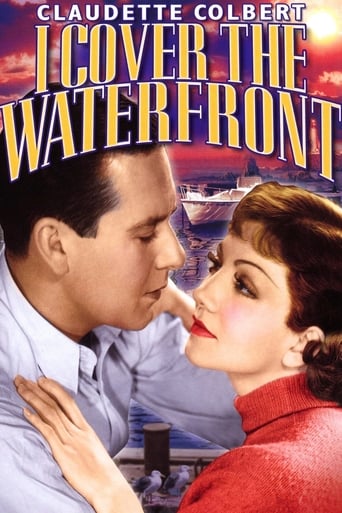
ksf-2 Ben Lyon and a thirty year old Claudette Colbert star in this "newspaper reporter stumbles into something big" deal. Lyon is reporter Joe Miller, who bumps into Julie Kirk.. she just HAPPENS to be the daughter of smuggler Eli Kirk, but Miller wants the chance to investigate. This one moves a bit slow, and we spend a lot of time following the fishing antics of Julie's father. Miller discovers quite a bit about the father, but will have to follow it through. Based on the book by Max Miller. Miller also wrote "Hell and High Water", but Turner Classics must not have that one, since there are no rating votes on that. There IS quite a bit of bio information at the Online Archive of California, apparently from his collection of papers at U.C. San Diego. Interesting to note that the lead is a reporter named "Miller", in a story written by a reporter named "Miller"... Film directed by James Cruze, who had started as an actor in the wee days of silent films, but crossed over to directing in the 1920s. Lyon had been in silent films for YEARS, but Colbert had only been in the biz a couple years. It's pretty good. Drags in some places. Story itself is pretty solid... just moves kind of slow.
JohnHowardReid This museum piece will interest only rabid Claudette Colbert fans and dyed-in-celluloid film buffs. James Cruze's direction is totally and inexcusably routine, almost all his scenes shot in either long, static takes or monotonously intercut reverse angles. Worse, the action scenes are few and poorly staged. Cruze uses very little camera movement, though admittedly what little he does employ is very effective — the camera pulling back from the piano to Torrence; the lengthy tracking shot of Colbert and Lyon taking Torrence home. Also on the reverse side of the ledger, the script is overloaded with banal dialogue — though Hobart Cavanaugh's tippling reporter is allowed one really amusing riposte — most of it delivered at a rapid pace by an extremely wooden Ben Lyon. But, luckily for us, Miss Colbert is as entrancing as ever. Even a rotten vehicle like this cannot dim her charm. Her presence is undoubtedly the film's sole recommendation — a fact realized by the photographer who gives her many attractive close-ups. Ernest Torrence, on the other hand, over-acts.
robert-temple-1 This film was excellently directed by James Cruze, best known for 'The Great Gabbo' (1929) with Erich von Stroheim, and the Will Rogers vehicle, 'Mr. Skitch' (1933). Cruze died rather young, and has never been properly appreciated. Here he has made a gritty and realistic drama of the California waterfront with lots of harrowing location footage shot at sea showing the dangers of shark fishing. Apparently, great white sharks were hunted by harpoon from small rowboats, and here we see just how wrong this can go. The story is all about Claudette Colbert, here as radiant as ever she was, despite the fact that all the characters in the film including herself are morally ambivalent at best. Her father is a ruthless people smuggler who does not hesitate to throw a Chinese illegal immigrant overboard to save himself from discovery by the Coast Guard, but despite being this sort of character, he is powerfully played by character actor Ernest Torrence as someone entitled to our sympathy, and Claudette goes on loving him despite his crimes, which surely must have left some touches of mildew on her supposedly stainless character? As for her love interest, the dogged newspaper reporter played by Ben Lyon, who is sick of the waterfront and wants to go back to the sanity of Vermont, his own character flaws are wide enough to drive a rather large fishing boat through. All of these iniquities are glossed over, as we are encouraged to root for the romance of this couple, and we very quickly drown in the deep pools of Claudette's soulful eyes (which, by the way, has anybody ever noticed, are too far apart). This is absolutely not a sugary Hollywood drama. Its moral ambiguity possibly makes it all the more interesting.
jesswis For those who like "It Happened One Night", read = fans of great quotes, the boozer/ace/snoopy journalist flicks, or Claudette Colbert's big doe eyes, it's a must see film. Add to that the titillating and graphic aspects of the film, which was made only one year before the 1934 amendment of the Hayes motion picture production code* and you have a film or media history lover's paradise. I'm talking same-sex bed sharing, white people being restrained, graphic deaths, explicit techniques for breaking the law; the works. That's pretty much where the plot twists begin and end, but it's enough to keep a viewer, uh, captive. Anyway, the film is based on a book by a reporter who wrote about the shipping and fishing docks on the Pacific Ocean in the 1930s. There's unemployment and there's the black market; there's those who survive by any means necessary, and those who just sink for lack of work. And then there's journalistic integrity somewhere in the hazy mix.With an editor who won't leave him alone because the leads are constantly rolling in, wannabe investigative reporter Joe Miller (Ben Lyon) can't get a decent night's rest from his waterfront beat. Forced to cover everything from bootleggers to herring stench, mob arrests to nude swimmers, he's got no choice- he'd be out a job if he doesn't jump when the boss says so. His pantheon of sources, all characters, comes to include the daughter (Claudette Colbert at her sassy best)of his favorite mark for reporting: Eli Kirk, a kingpin of the docks and bootlegger extraordinaire. Seeing his in with Kirk's daughter, Julie, Miller dogs the seafarer, convinced he can pin him with illegal immigration of Chinese workers (whose lives are quickly extinguished by smugglers if the KGB-like Coast Guard should come their way, sirens blasting).Miller's editor, unlike the fish in whose bellies Kirk so often carries his bottles, doesn't bite, reminding his ace that he needs to prove it with facts, not hunches. So Miller sets out to use Julie, the captain's daughter, to prove it. Alas, as can be expected, love gets in the way. And he soon learns she may not bargain easily when it comes to her father. Will Miller be able to unearth the smugglers and get the girl or will he lose his editor's patience, steamy love affair, and his job in the process?The movie's got more life, wit, and zest in presenting determination and desperation by far than Grapes of Wrath (the movie). *From Wikipedia: 1934 changes to the CodeThe Motion Picture Association of America responded to criticism of the racy and violent films of the early 1930s by strengthening the code. An amendment to the code in June of 1934 prohibited any reference in a motion picture to illicit drugs, homosexuality, premarital sex, profanity, prostitution, and white slavery.