Clevercell Very disappointing...
Beystiman It's fun, it's light, [but] it has a hard time when its tries to get heavy.
ThedevilChoose When a movie has you begging for it to end not even half way through it's pure crap. We've all seen this movie and this characters millions of times, nothing new in it. Don't waste your time.
AnhartLinkin This story has more twists and turns than a second-rate soap opera.
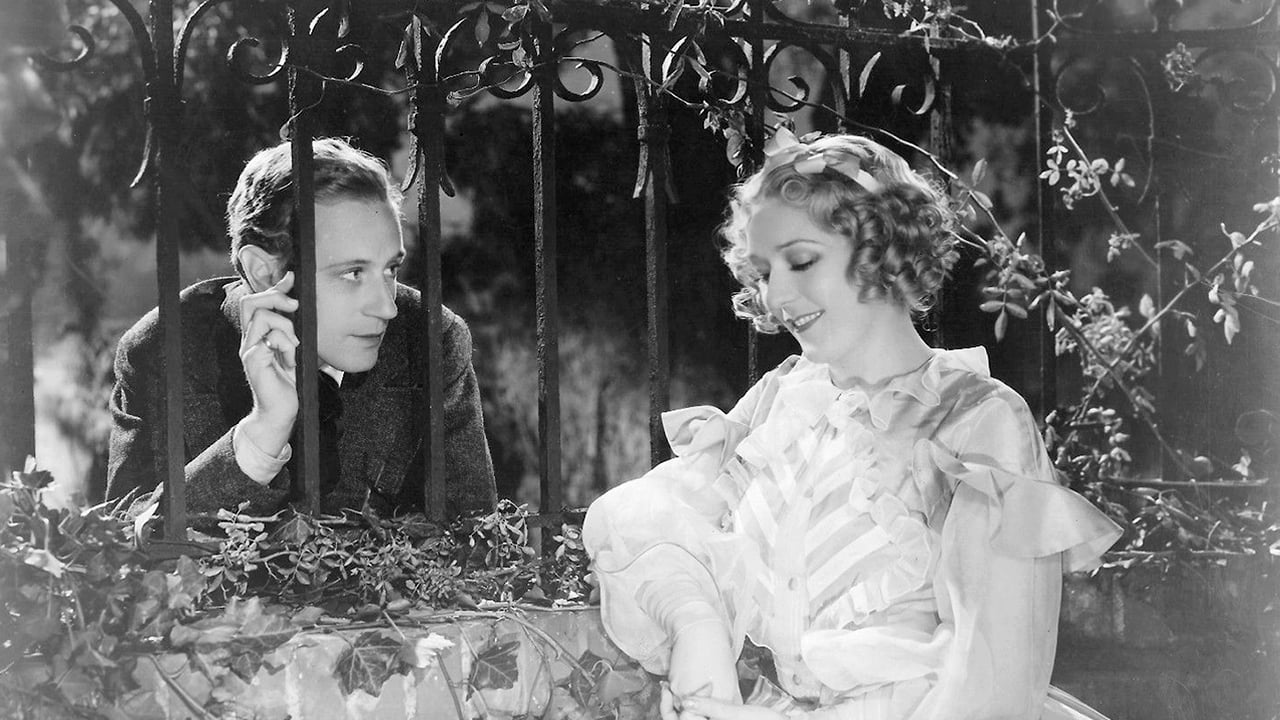
JohnHowardReid Although it wasn't planned that way at the time, Secrets (1933) turned out to be Mary Pickford's last film. An odd choice for her, since the male role is the main one. Although not a total write-off, the film's more than a bit disappointing. Most movies adapted from stage plays do their best to disguise that fact. This one doesn't! The action falls into three very distinct Acts. The first is played mainly for comedy with Leslie Howard (of all people) enacting a clownish young man on an idiotic penny farthing bicycle - and playing it most unconvincingly. I suspect that Marshal Neilan directed most of this rubbish before producer Pickford woke up to his incompetence and fired him. His replacement, Frank Borzage handled the night garden scene with pictorial finesse, but didn't do much with the rest of the movie, although the Second Act turned out as actually the most interesting of the three. It's a western, would you believe, with Leslie Howard as a gunslinger? He's more convincing than you might expect, but we have to wait for Act Three before we encounter really charismatic acting - and it doesn't come from either the stars or the main support players, but from Mona Maris who plays her one scene with presence and style. The aim of the stage play was obviously to show the main male character through three stages of his life - young, unsure romantic, then reluctant hero, and finally discredited heel. This sort of stagey device can work well in a theater where the Acts are conspicuously separated by long Intervals while the stage-hands change the set. In a movie, where the Acts are divided by no more than an insert title, the device seems both jarring and artificial - here especially as neither Howard nor Pickford can muster enough gusto to bring it off. No wonder Pickford never returned to the screen! You might have the main role, but even an incompetent male lead - or a really jazzy also-in-the-cast whom the director, the photographer and the dress designer wish to indulge - can muscle you right off the screen and put you in the shadows!
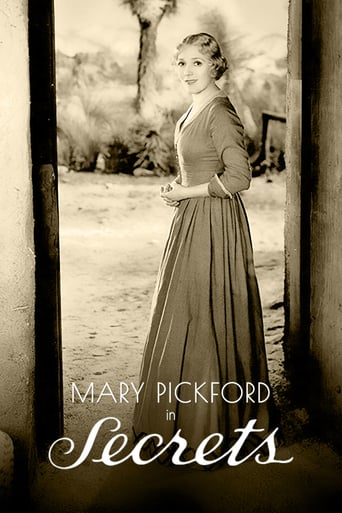
jjnxn-1 Pickford's screen swan song is her best talkie, admittedly not a high bar, that moves at breakneck speed through its tale of the romance, marriage, struggles and ultimate success of its main couple. It crams too much into its 83 minute running time but as early sound films go it's not bad.At 42 she's unconvincing as a young belle at the beginning of the film but after about ten minutes she's out of that guise and from then on her performance is quite good. Unsurprisingly her strongest moments, as well as the film's, are the one's without dialog. It gives a peek at why she was one of the queens of silents and it seems regretful that just as she was adjusting to sound she chose to withdraw. The film wasn't a hit on release and Mary, nothing if not canny, sensed that though the parade had not passed her by as of yet it was just around the corner. So she retired, enormously wealthy and a power broker behind the scenes.
dbdumonteil Today ,I'm still wondering how Frank Borzage could make so many wonderful movies for so many years !Think of it!"Secrets" came after "A farewell to the arms" and just before "a man's castle" followed by "no greater glory" and "little man what now?"!And there were plenty of masterpieces in the silent era and there were so many to come afterward.Who can compete with him?I'd like to know! "Secrets" is more of the same : the lovers against the hostile world,two lovers who will "see it through for their love is true".It is composed of three parts ,apparently disparate ,but when the movie is over ,you feel it's a seamless whole ,mainly after the old folks want to be alone to share their secrets .First part displays echoes of Romeo and Juliet ,complete with ladder ,a bourgeois family and a romantic escape;in the second part ,Borzage shows us the heroine in a less comfortable house where drama gives way to tragedy:this scene in which Mary Pickford is holding her dead child is one of these heartrending moments which abound in Borzage's canon : other examples can be found in "no greater glory" when they carry the dead little soldier home or in "the mortal storm" ,when James Stewart holds Margaret Sullavan's body or in "young America" this drawing which shows the two boys flying.The last third can seem weaker by comparison but further acquaintance shows this: Borzage had already anticipated the future and its great sagas/serials which appeared in the fifties :and he made this in about 40 minutes whereas the others would take two or three hours.Borzage was certainly equaled,but never surpassed.
TomInSanFrancisco This movie is like three one-act plays -- the Mary Pickford and Leslie Howard characters appear in all three of them, but it doesn't add up to a cohesive story with believable character development.The opening act is played broadly. Mary P. is too old for the part -- certainly too old to play C. Aubrey Smith's daughter! And she plays the entire movie on the same note.The middle section is a Western. Leslie Howard isn't a likely cattle rancher.The final segment leaps the story forward by 20-some years -- much has happened to the characters, but we didn't get to see any of it.All in all, not much to recommend.