ChicRawIdol A brilliant film that helped define a genre
Chirphymium It's entirely possible that sending the audience out feeling lousy was intentional
Plustown A lot of perfectly good film show their cards early, establish a unique premise and let the audience explore a topic at a leisurely pace, without much in terms of surprise. this film is not one of those films.
Hayden Kane There is, somehow, an interesting story here, as well as some good acting. There are also some good scenes
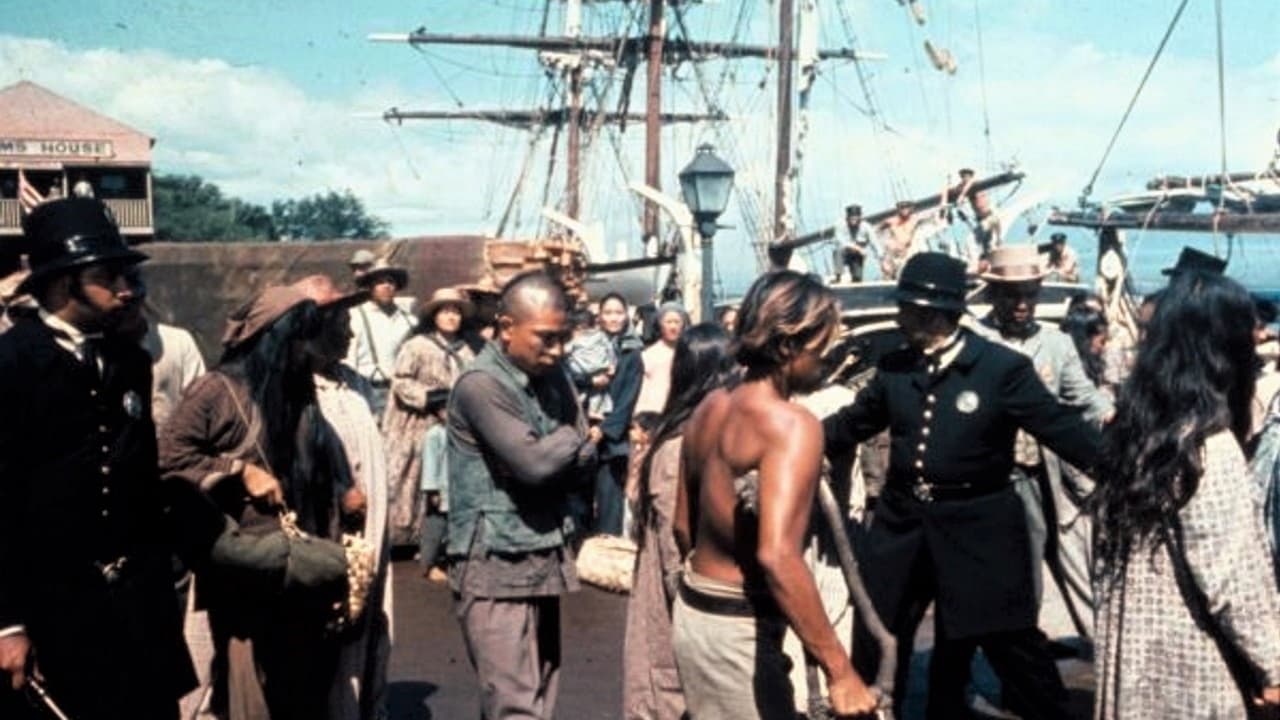
Valentijn I have not read the books, so I have no idea how true the movie is to them. I also haven't seen "Hawaii", to which this is apparently a stand-alone sequel, so I can't make any comparisons. I did live in Hawaii during high school, and had quite a few lessons in state and native Hawaiian history - much more than the writers had, apparently.The Chinese casting was very good, and mostly Chinese. Unfortunately there were few if any Hawaiians involved, except a few extras. Queen Liliuokalani, for example, is played by a Jewish woman doing an accent that could best be described as "aristocratic Italian". There's a couple of white women with impressive spray tans at different points in the movie, both playing mixed racial characters as far as I could tell. The wife of the main character is played by a very white woman, yet is supposed to be one-quarter Hawaiian.The native Hawaiian movement to keep Hawaii as an independent monarchy is illustrated by the insanity of the main character's wife. Her desire to get in touch with her roots is intermingled with her portrayed hysteria and tenuous grip on reality. The natives she lives among for a while are apparently just as nuts, since they never appear to notice that she's unhinged. There's a brief condemnation of exploitative white businessmen by the Queen, which is itself immediately undercut when she irately orders the execution of one. This seems to be aimed at dismissing the lingering modern opposition to the forceful overthrowing of the Hawaiian government by the US government.So the general impression is of successful white American businessmen building the future state, versus various savage ethnic groups engaging in violence and spreading disease. The Chinese woman and her son gain some success and respect by embracing the American way, starting a business, and going to law school. And even that success is marred by the Chinese businesswoman promising to overcome by out-breeding the whites.The acting and scenery were excellent, but this movie is a eurocentric relic which should stayed buried.
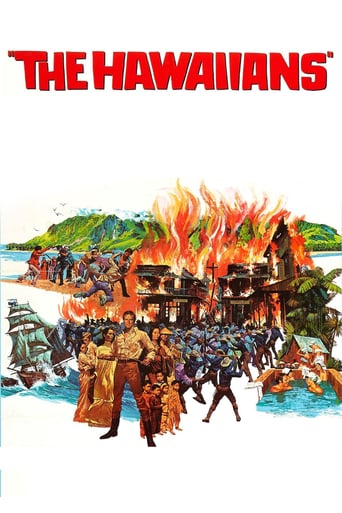
Xander Seavy (RiffRaffMcKinley) Given the epic nature of James Michener's thousand-page novel "Hawaii," if the first film did any kind of positive business whatsoever, a sequel was bound to happen. The result is actually quite good, though nowhere near as good as George Roy Hill's original. Practically none of the original cast or crew has returned. Hill was succeeded as director by Tom Gries; Trumbo and Taradash are replaced on script duty by James R. Webb ("How the West Was Won," "Cheyenne Autumn"), who certainly had a bizarre gift for crafting intelligible and reasonably entertaining stories out of momentous historical hoopla. And since it takes place a couple generations after the end of the first film, obviously the cast is all gone. Charlton Heston adds more than prestige (he also adds presence and strength) to the central character of Whip Hoxworth, with Geraldine Chaplin decent but underused as his odd wife Purity. Mako is terrific as a Chinese peasant farmer who comes to Hawaii after cheating himself a new wife-- Char Nyuk Tsin, played by Tina Chen in a performance that starts off rather uninteresting but blossoms into a real stunner. The story goes on through racial strife, economic and ecological developments on the islands, political turmoil, and personal tragedy, very much in the spirit of the first "Hawaii" but without all the buildup (remember how much time had passed before we saw the islands in the first one?) and with a quicker pace. The film is lush, intriguing, and adequately enacted, but there are a few obstacles to overcome before you can really get into it. The worst of these is Henry Mancini's tacky, obvious, ethnic cliché-infused score, which comes nowhere near the scope, emotion or wonderment of Elmer Bernstein's original. If Bernstein couldn't have been secured, surely there was a better option (Jerry Goldsmith springs to mind) than Henry "The Pink Panther" Mancini. But the score does have a few moments of... well, adequacy. Given that the film obviously failed and-- having never been released on either VHS or mass-market DVD-- both suffers in obscurity while toiling in notoriety, and given that the first film was (at least to this reviewer) almost thoroughly a masterpiece, "The Hawaiians" is much better than can be expected. And compared to the lame sequels that stuff the cineplexes these days, it plays off like a "Citizen Kane" or a "Godfather."
FromBookstoFilm What I really enjoyed about the Hawaiians was the story of how Hawaii came to be such a cultural melting pot. The Polynesians were the aboriginal peoples of the Hawaiian novels. Next came the American and European whites mostly missionaries or seamen. Then came the Chinese followed by the Mediterranean European Portugese and then the Japanese and Filipinos. Hawaiians movie does a great job of covering the Chinese immigrants at the beginning of the story Tina Chen and Mako did a fine job in the film as a Chinese Man and his second wife whom by Chinese law at that time was considered in reality a concubine. The scenes at the leper colony was very close to the original in the book and the rape of the beautiful Hawaiian leper girl Kinau who did not show except for one sign of the disease is also graphically depicted in the film. In the novel the concubine has all sons.In the movie version the concubine has one daughter.A character that has been created from Japanese and Chinese characters in the book.The Japanese former comfort girl mistress of Charlton Heston was actually a made from several different females in the book. Charlton Heston did a great job in his part but in actuality and no fault of his own but of the screenwriter his Whip character did not remain faithful to the book portrayal and Geraldine Chaplin her character should have been left out entirely since it was another streamline of other female characters. People who viewed this movie couldn't relate to Geraldine's Purity's character. She apparently was unhappy in her marriage gave Whip a son but didn't want to return to the marriage bed.Frigid and emotionally detached. She kept going back to her full blooded Hawaiian relatives and the church. She was comfortable with the old ways and not the new and certainly not her husband's sex drive. John Phillip Law plays the son of Whip and Purity who later married a Chinese girl the daughter of the Chinese couple was told to keep his quarter Polynesian blood a secret by his father. There was racism by the so-called Pure white stock against Caucasians who had a little of the Polynesian ancestry. Pure Polynesian Hawaiians weren't too happy at first with their children intermarrying with Caucasians or mainland Asian Chinese then Koreans or other island Asiatic groups like Japanese and Filipinos but it happened. Bottom line on this sequel-Good Movie but not what one could call faithful to a James Michener's novel. The Chinese storyline pretty much stayed close to the depiction in the book. The James Michener novel Centennial was better adapted to the small screen than this epic sequel.
Robert J. Maxwell You have to admire James Michener's resolve. He's the guy who wrote the book this screen play is based on. Michener wrote one novel or non-fiction work after another, each of them requiring an unconscionable amount of historical and geographic research. There are a couple of dozen doctoral dissertations scattered among his books -- "Centennial," "Texas," "Alaska," "Poland," "Iberia." This is about a certain part of Hawiian history, a sprawling epic, as they say, following multiple narrative threads through three generations. The principal thread belongs to Charlton Heston, who begins as a reckless and uncaring sea captain and winds up as a cigar-puffing prosperous land owner, the evolution being the result of his willingness to take risks. The other main thread belongs to Tina Chen, who begins as an outcast young Chinese woman and becomes a socially prominent leader of the Chinese community in Honolulu. She's a minority among the Chinese in that she is Hakka, an internally marginal group in China. Her minority status isn't Michener's literary trick either. Hakka is one of half a dozen or so common dialects in Chinese and in one of my classes we had representatives of all of them lined up at the front of the room pronouncing one familiar word after another. There was an obvious family resemblance among most of them. You could "hear" the buried Cantonese word when it was spoken in Mandarin Chinese. But not Hakka. It was to the other dialects what Rumanian is to the other Romance languages.Wait a minute. Was that "off topic"? Well, it doesn't matter much. There's no describing the plot of this movie. If anything ever happened in Hawaiian history, it happens to somebody in this movie. You want to talk leprosy? Racism? The switch from a monarchy to a territory of the United States? The plague? Let it simply be said that it's all here.Charlton Heston is his usual monolithic self and fills the character appropriately. Tina Chen is a beautiful woman who is, at best, professional. We don't get to see much of Geraldine Chaplin, who rediscovers her native Hawiian genes and appears to go nuts. John Phillip Law isn't around much either. Tina Chen's husband is Mako (who is Japanese) and he's quite good in what is essentially the same role he played in "The Sand Pebbles." Some of the supporting players appear to have been chosen for their looks rather than their talent.I rather like Hawaii, at least as it was when I was last there, years ago. There's a good deal of solidarity to be found on the islands. During the turmoil of the 1960s when American cities were in the grip of violent revolutions or their simulacrums, Honolulu went quietly about its business, and that in a city more ethnically diverse than any found on the mainland.Anyway the film is worth watching. I can't say I was especially gripped by any of the incidents or characters. I'd recommend it if only for its educational properties. Michener was only rarely effective as a dramatist but all that time he put into his research certainly paid off.