Unlimitedia Sick Product of a Sick System
Nessieldwi Very interesting film. Was caught on the premise when seeing the trailer but unsure as to what the outcome would be for the showing. As it turns out, it was a very good film.
Ava-Grace Willis Story: It's very simple but honestly that is fine.
Marva It is an exhilarating, distressing, funny and profound film, with one of the more memorable film scores in years,
g_dekok John Ford is one of my favorite directors (to my wife's dismay!) and I will watch his films, repeatedly and see something new every time. "The Hurricane" is one of his best, I think. The casting is excellent, especially with John Carradine as the sadistic warden, and Raymond Massey as the island's governor, who is trying to hold onto his position of power, knowing full well of the situation that sends Terangi (?) to an unjust prison term. It's extremely well written, directed, and acted. The gentleman who played Terangi, Jon Hall, was a direct descendant of Charles Nordhoff Hall, who also co-wrote Mutiny in the Bounty. Don't let the naysayers talk you into not seeing this excellent movie.
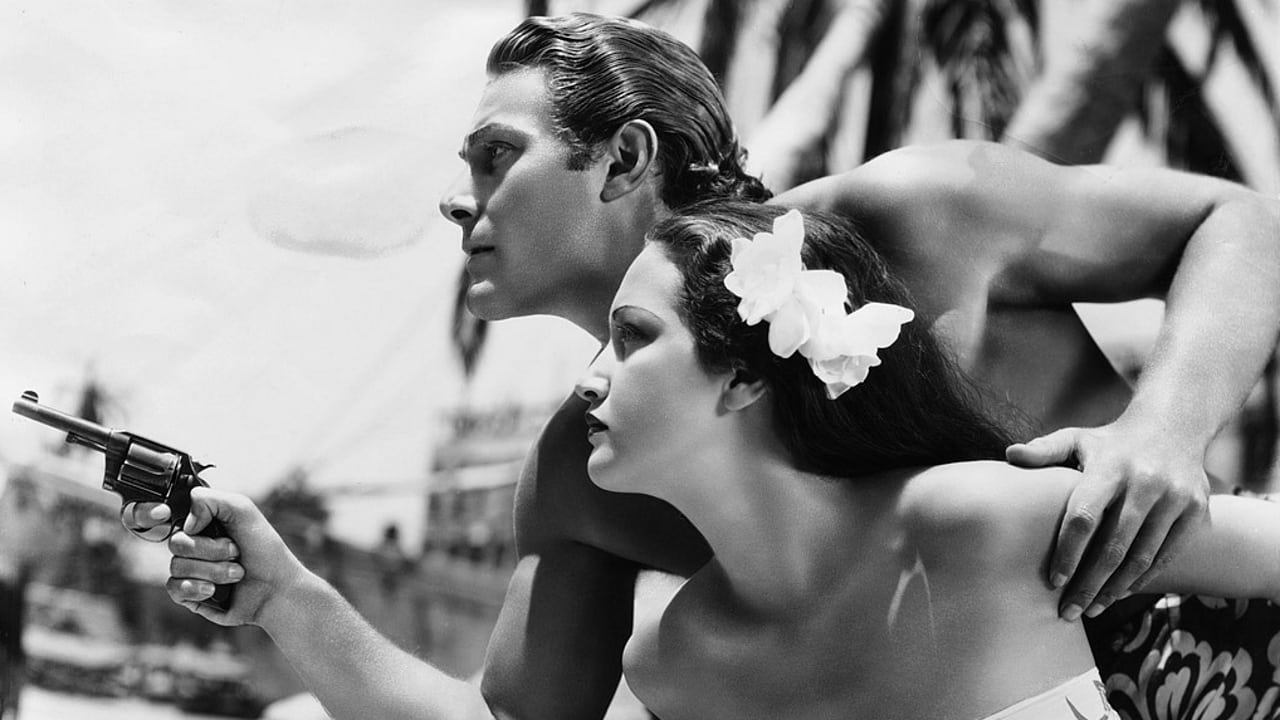
CinePete One of John Ford's best films of the 1930s -- and certainly the best of the so-called "disaster" spectacles in mid-decade.Unlike those epics, it's not just a trite build-up to a big climax. As fashioned by Ford and writer Dudley Nichols (after the Nordoff & Hall novel), The Hurricane is a passionate narrative of wronged humanity, with strong outrage against European colonialism in the South Seas. In this case the brute force of the French penal system awakens an intense, vindictive doggedness in the defiant hero, Terangi (Jon Hall), not dissimilar to Jean Valjean in Les Miserables.Ford uses his strong visual sense, heavily influenced by German Expressionism, to give a torturous, altogether grim picture of Terangi's ordeals as a convict. French Governor Raymond Massey and prison warden John Carradine, each with exceptional sternness and malice, invoke the harsh brutality of the Law. The European sense of superiority overrides any natural compassion for fellow humans.It is up to a sincere Mary Astor and a wonderfully irascible Thomas Mitchell to advocate a more benevolent European attitude.When the hurricane comes, it strikes with relentless fury, crashing, pounding, smashing up things, sweeping away islanders in a still breathtaking 14 minutes of screen time. The backlot staging, Oscar-winning sound design, montage editing and process shots (some a little too ambitious for the time ) still impress the techno-savvy 21st century viewer. A constantly ringing church bell - as if a plea for divine mercy - works to striking effect. Executed by effects supervisor James Basevi and A.D. Stuart Heisler, it's a terrific accomplishment, rendering The Hurricane superior to disaster films as San Francisco and In Old Chicago.In the larger framework, nobody seems ill at ease with native rituals and customs, possibly from the long association of writers Nordoff and Hall with the South Seas, Ford's own love of the islands, and Jon Hall's lineage as part Tahitian himself (his mother was Tahitian-born); albeit defined by the larger attitudes of the period, the conception of spirited islanders struggling against European domination seems genuinely achieved.
JohnHowardReid Copyright 4 January 1938 by Samuel Goldwyn, Inc., Ltd. Presented by Samuel Goldwyn. Released through United Artists. New York opening at the Astor, 9 November 1937. U.S. release: 10 November 1937. Australian release: 31 March 1938. 12 reels. 102 minutes. NOTES: Prestigious Hollywood award, Sound Recording (defeating The Girl Said No, Hitting a New High, In Old Chicago, Lost Horizon, The Life of Emile Zola, Maytime, One Hundred Men and a Girl, Topper and Wells Fargo). Also nominated for Supporting Actor, Thomas Mitchell (defeated by Joseph Schildkraut in The Life of Emile Zola), and Best Music Score (One Hundred Men and a Girl). Number 10 on The Film Daily's annual Best Films poll of U.S. critics.COMMENT: Of the 80 feature films produced by Sam Goldwyn, my personal favorite is "The Hurricane". (It's also second only to "Stagecoach" in my preferred list of John Ford movies.) Why? Well, firstly (and least importantly). it's a great spectacle. The use of miniatures is occasionally obvious, but the way that hurricane is staged and edited just overwhelms the senses. Secondly, here is a movie that appeals to the ear, with convincingly dramatic dialogue and a haunting musical theme. Thirdly (and now we're getting into the really important qualities), "The Hurricane" is a visual paradise — superbly photographed, attractively lit and composed. Fourthly, it has a strong story with believable and sympathetic characters. And fifthly, it is enacted by an absolutely faultless cast. It has been argued that Lamour is just a decorative sarong girl, Hall merely a personable swimmer, Astor too glamorous a governor's wife, and Massey too perversely dogmatic a white supremist. These claims (and similar criticisms) are nonsense. The performances are totally enthralling and completely convincing. When Terangi is thrown into prison, the director is not afraid to focus on Hall's anguished face; when Marama spurns Germaine's sympathy, Miss Lamour's manner betrays not the slightest trace of artifice or falsity. Admittedly, Massey is doggedly over-zealous and even theatrically paranoid — just as Carradine is over-sadistic — but these emphases are necessary for the dramatic forcefulness of the plot. All in all, It's a gripping story — worthy of the writers of Mutiny on the Bounty — and it's been translated to the screen with enhanced force and vigor thanks to the visual expertise of Goldwyn and his entire cast and crew. The film editor, for instance, has performed numerous unsung miracles in pacey yet smooth cutting of the material from the various units. For example a dockside scene directed by Ford is deftly topped with a closing shot of Hall untying a canoe directed by Heisler. In general, Ford directed all the studio sequences — except the Basevi special effects such as the hurricane and the studio storm with Hall in his canoe and all the tank shots, e.g. Hall fighting the shark. On the other hand, Heisler directed all the exterior location footage, including the diving stunts with Paul Stader and the breathtaking sequence in which Terangi/Stader just misses his ship.
nomoons11 This is another one of those films from an A+ Director that's just not one of his best unfortunately.A Pacific Island is home to some peaceful natives. One is a Captain on a ship and has been promoted rapidly up the ranks. He gets married before he goes on his next trip to Tahiti then sets off. In Tahiti he gets into a fight and breaks the jaw of a local important official with connections. He has done nothing wrong but defend himself but he gets 6 months in jail anyhow. They tell him to hold out and it'll be over soon but he can't wait to get back to his wife and proceeds to repeatedly escape and get recaptured. The last time he tries and succeeds but kills a guard accidentally. Throughout all this he has to deal with a sadistic guard who eventually becomes the warden and repeatedly taunts him. The Governor of his home island is not swayed by his innocence from because the law must be upheld regardless. When he finally arrives home, at the same time, a hurricane arrives.The whole story is really about choosing what's right and wrong with the justice system. The Hurricane is only in the last part of the film...and the best part. John Carradine plays his usual scumbag self as the prison guard without a conscience. I do believe he was the original bad guy in film as he has played those roles since he's been in films. Looking at him you know he's no good but that was his niche so he was typecast with it....effectively I might add. The over-acting comes in the form of Raymond Massey. It's just ridiculous to see him play this holier than thou island Governor who plainly sees the injustice happening and he just keeps his mantra going..."the law must be upheld". It's really a theater type of acting that makes it really corny to watch. If you've ever seen John Barrymore act in film then you'll know what I mean. His type of acting performed by Raymond Massey was not needed. The miscasting came in the way of Jon Hall. Wow what a terrible actor. He is easily one of the best looking male actors in history but if you notice his screen credits after this film, you'll notice they're all B grade stuff. Why you say? Simple...he was a terrible actor. I have never seen him in anything other than this but it's plain to see why he never succeeded in major roles. He needed some serious acting lessons.The real reason to see this film is last 15 to 20 minutes. The special effects in this are stunning. I have never seen a film about a Hurricane more effective than this. You will feel absolute terror for these people in the end. You will find it hard to believe how realistic these effects are. Even by today's standards it's a 10 on the wow factor.See this one for the special effects..and maybe to take a notch out of your John Ford film catalog. Other than that it's nothing special imo.