Platicsco Good story, Not enough for a whole film
Moustroll Good movie but grossly overrated
InformationRap This is one of the few movies I've ever seen where the whole audience broke into spontaneous, loud applause a third of the way in.
Fatma Suarez The movie's neither hopeful in contrived ways, nor hopeless in different contrived ways. Somehow it manages to be wonderful
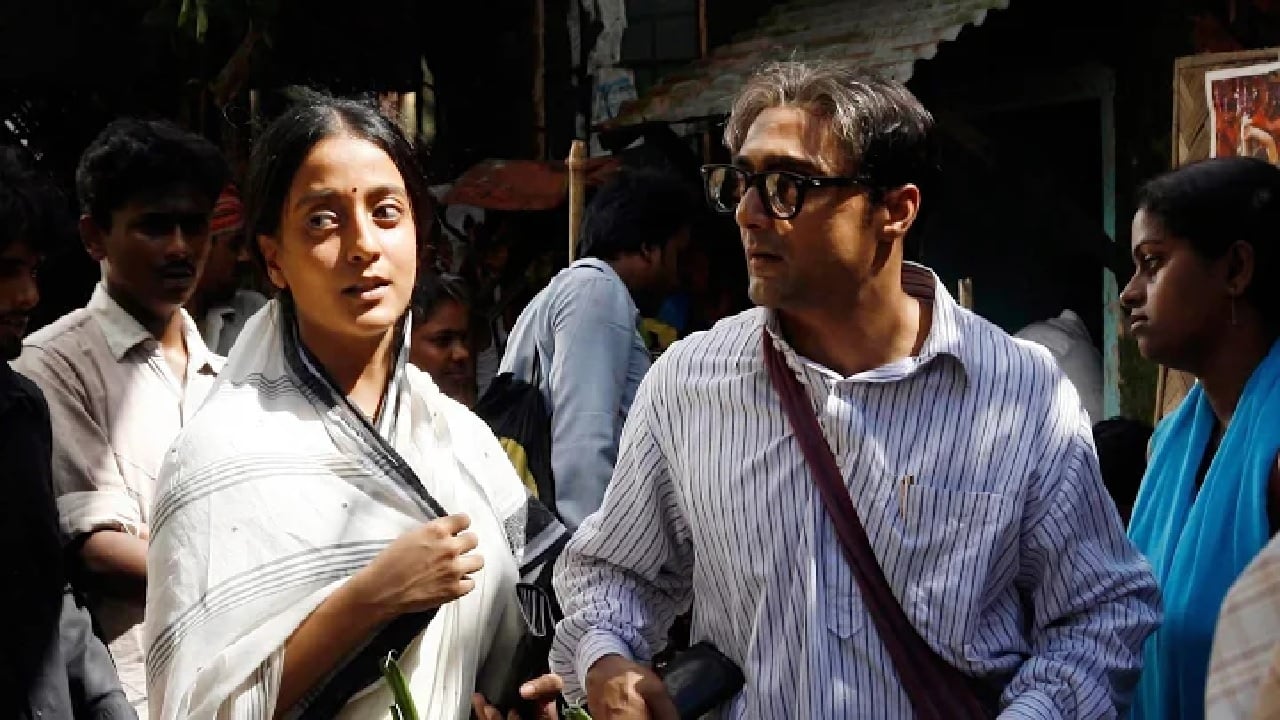
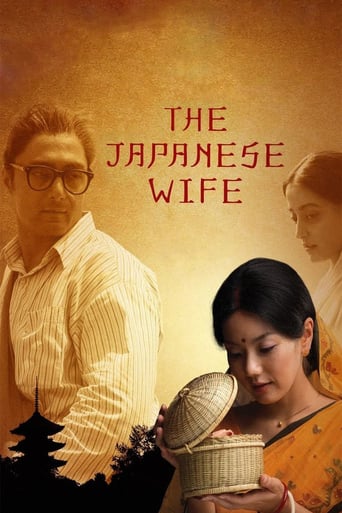
rahul-sah089 I like this movie. It is having a tragic end which is going to stay with you forever. The movie depicts the charming love story of Snehamoy, a mild manner school teacher staying in the outskirts of Suderbans(a village in West Bengal) and a girl faraway in a Japanese village who start out as pen-pals,fall in love and remain in long distance relationship for almost 17 years without meeting each other.Their romance unfolds through series of letters and occasional phone call.Surely this movie will evoke emotion within you."The Japanese Wife", being made by Aparna Sen, one of India's top art-house filmmakers, is the latest in a trend to showcase the lives and emotions of ordinary people in contrast to Bollywood's traditional offerings of fluffy romances or violent dramas.
johnnyboyz I've little doubt that Aparna Sen has produced his 2010 film The Japanese Wife with the best of intentions; the piece covering the exploits of two people and the love they share across a vast distance, without ever actually being able to meet. The film aims for swooping; sweeping; love-lorn imbued romance of grandeur proportions that it believes will have a greater effect on its audience than it does in reality, a piece covering those sharing a seemingly impossible tie across such a great distance and yet having the maintaining of such a relationship look later like the least of each of their respective woes. What it more often than not resembles, however, is a trite; television disease movie of the week - a film that has all but lost us by the end as little more than a contrived and limply made drama, sickly easing its way from sentimental set piece to set piece as these people come together to softly spoken narration and warmly lit locales.The film covers that of young Indian Snehamoy (Bose), a single gentleman with a penchant for maths whom lives alone with his cat on a rural patch of land in a village not too far from a more hustling, bustling town of activity. Snehamoy latches onto a system encompassing long distance relationships with other pen-pals – people of whom wish to exchange letters and so on; a sort of lonely hearts club for people wanting to look abroad or over a longer distance for potential love and kinship. With this arrives the (eventual) titular Japanese wife, named Miyage (Takaku), as well as the long distance relationship that makes up the crux of the film. It's here, despite the modern setting, the film rejects the notion of more contemporarised means of communications; settling for pen and paper over e-mail or social networking and thus gambling on etching as much effect as possible out of such means – a gamble I was wanting to come through, but doesn't. With it, we are to suspend our belief that, despite Japan being somewhat of a hub for global technology – technology encompassing annoying innovations that actually make it easier for one to communicate, the Japanese based Miyage will engage in the premise that she does for ideas and thought exchange.It is established Snehamoy has already beaten malaria on three separate occasions, so the man is a fighter or someone used to striving on through relatively tough, testing times; the film really kicking off when Miyage arrives on the scene and the exchanges begin in earnest. The plot, suffice to say there barely is one, consists of Snehamoy and Miyage exchanging letters and getting along relatively swimmingly amidst the relationship Snehamoy shares with his aunt, with whom he sees eye to eye more often than not. That's it, that's practically the entire story. The bond works too quickly between Snehamoy and his Japanese contact, they fall in love over one another's written word and exchange marriage vows before maintaining that trust across fifteen years; the leap forwards providing the audience with little in the way of time to allow for their marriage to resonate and falsifying the naturalistic feel to their ties the film aims for.Around it, a meaningless and entirely fruitless exercise in melodramatics transpires; two people getting along wonderfully well, but kept apart by the distance between them, continuing to exchange letters and continuing their lives made tougher only by the fact social interaction with others is difficult. They deduce travelling to see one another is challenging, the exchange rate between the Japanese and Indian currencies rather vast and yet at no point does Miyage ever offer to pay for Snehamoy's air-fare for a bond that is supposedly so intense. The Indian telephone lines down at Snehamoy's end are usually rife with demons, making communication there quite tough and keeping the written word the only means through which to communicate. Letters are sent and letters are received; and then more letters are sent and then the damn things are narrated, because static shots of pieces of paper for long durations I guess isn't interesting; and we wonder if these people are really eloquent enough to put down the things they write or whether we are hearing a screenwriter's fifth draft of a hodge-podge script.Later, Snehamoy has what can only be described as a "kite-off" with some fellow Indians whilst using the Japanese kites his wife has sent him. Snehamoy, being as qualified in mathematics as he is, and with that coming the required knowledge in sums; volume; mass and formulae, is able to have this "kite-off" on a day in which there is very little wind – work that one out. These fellow Indians, whose own kites see them label the contest one of national pride, induce antagonism against Snehamoy because of his tryst with Miyage; sources of antagonism which stand alone and unchallenged in what is a fairly interesting area for such things, one of which might have seen the exploring of ill-judged prejudices people have against both inter-racial relations and cross-cultural bonds. Surprisingly, Sen backs off from such a thematic; instead offering us flat, banal alternatives.Later on, Snehamoy's aunt, whom through some convoluted means, introduces a young woman to proceedings; a female character that appears to fall at Snehamoy's feet and comes equipped with a daughter Snehamoy bonds well with. However she, like us, can only continue to observe Snehamoy stick to some undying principal that has him loyal to his Japanese wife of a decade-plus; the whole thing feeling like an odd glorification of speeding up one's romantic ties, through whatever means, when the waiting and allowing natural enough processions to play out with those in proximity to you, and to what would have been a charming scenario of romance with this new woman, appearing evident. Stale; repetitive and really rather misjudged in the places it goes, The Japanese Wife is one to skip.
bwing55543 A self-billed "love poem" by Aparna Sen.The movie concerns itself with Snehamoy (Rahul Bose), a Bengali schoolteacher and his Japanese penpal Miyage (Chigusa Takaku). Eventually, they declare themselves married. However, Snehamoy finds that being married to a woman merely through correspondence isn't as easy as he thought.I did everything I could to ignore the sheer preposterousness of the basic premise. The movie never explained how did Snehamoy even met Miyage; there never was a personal encounter between them. The two characters are incredibly shy people; Snehamoy lives with his aunt who is the world to him and Miyage with her mother.The movie's story is told primarily with Snehamoy and Miyage narrating their letters to one-another in heavily-accented English; you know it is the native tongue of neither, so they both keep dictionaries handy when writing letters to one-another. The movie surrounds Snehamoy, so you know everything there is to know about him, and next to nothing about Miyage besides what she writes in her letters to Snehamoy.The movie also had a subplot where a widowed woman (who Snehamoy's aunt once tried to engage him to) and her son move into Snehamoy's house. It was vaguely hinted that Snehamoy and this woman had feelings for each other, but the way their relationship was handled was clumsy at best and bore little to no consequence to overall plot.In fact, that, like many scenes in the movie, kind of felt like it was merely added to pad the movie's length. Another scene that comes to mind is the "kite fighting" scene where Snehamoy pitted Japanese kites that Miyage sent him against local Indian ones. I simply failed to see what implications that scene held for the rest of the movie.Well, the big problem with the story that I was simply bored out of my mind, despite The Japanese Wife being only about 100 minutes long. The characters completely failed to engage me and I pretty much felt that there really was no point to the story. Moreover, every time the movie attempted to elicit some sort of emotion, be it laughter or tears, it totally fell flat on its face.To add insult to injury, Rahul Bose's acting was probably the worst I have seen in recent memory in a movie that was not a Mystery Science Theater 3000 episode. The supporting cast does a generally passable job, but Bose had so much screen time that he was simply impossible to ignore. Of course, having to read a rather lame script didn't exactly help matters.What I did appreciate was the movie's attempt to sort of be multicultural by giving lessons of Japanese culture (to an ostensibly largely Indian audience) at the beginning, but even then that was something the movie just sort of abandoned.Aparna Sen is known for doing rather artsy-fartsy low budget Bengali movies. I personally feel that they often wound up making it obvious how totally in love with themselves they are, and The Japanese Wife was no exception; I think the disc label calling the movie a "love poem" is indicative of that. I couldn't help but feel that Aparna Sen was almost over my shoulder saying, "Of course my movie is great! If you don't like it, that makes you a dumb gorilla incapable of appreciating real art!" I love indie films because most of the ones I have seen truly hold artistic merit, and that simply was not the case here.The movie began with a massive real showing a list of corporations that helped fund this movie. This is the first time I've heard of a pen company helping finance a movie; I felt that this list was shown at the beginning for one of two reasons:1. Sen wanted to say, "Look! We didn't have the money, but these corporations, EVEN A PEN COMPANY, saw what a great movie this would be and helped us bring this piece of art to life!"2. Or they knew not too many people would bother waiting to see all of the end credits to get to a "Special Thanks" list, so they might was well show it at the beginning.OK, it was a functional movie and a lot of effort was put into it, but TJW simply missed the mark. Unless you're suffering from insomnia and need a cure, you're better off watching something else. The Japanese Wife was simply extremely mediocre instead of being "so bad it's good".
eoias The Japanese Wife is an exquisitely crafted film, with the entire emotional gamut of a love story so unbelievable and yet so touching and universal distilled onto the silver screen. The performances are heart-rending and so realistic that the viewer is just pulled completely into the characters' world. From the restrained turbulence of Raima Sen to the poignancy of Chigusa Takaku, this film probably marks complete departures in roles for its entire cast. The direction is expectedly superb from Aparna Sen as each scene seems to sigh with the beauty of the Sunderbans and delicately fashion each character in the landscape.Most interesting for me was the subtle way in which the film tried to make a point about xenophobia and the stupidity of people who adhere to it. When Miyage sends over a box of kites for their 15th wedding anniversary which Snehamoy intends to fly at the Vishwakarma Puja, the sporting kite war is turned into shouts of "Bharater ghuri Zindabad! Japaner ghuri Murdabad!" from one ignorant tramp, which then another ignorant tramp turns into "Duniyar mazdur ek ho!".In all, a triumph for the cast, crew and for romantics who dare to believe in the impossible. A must see.