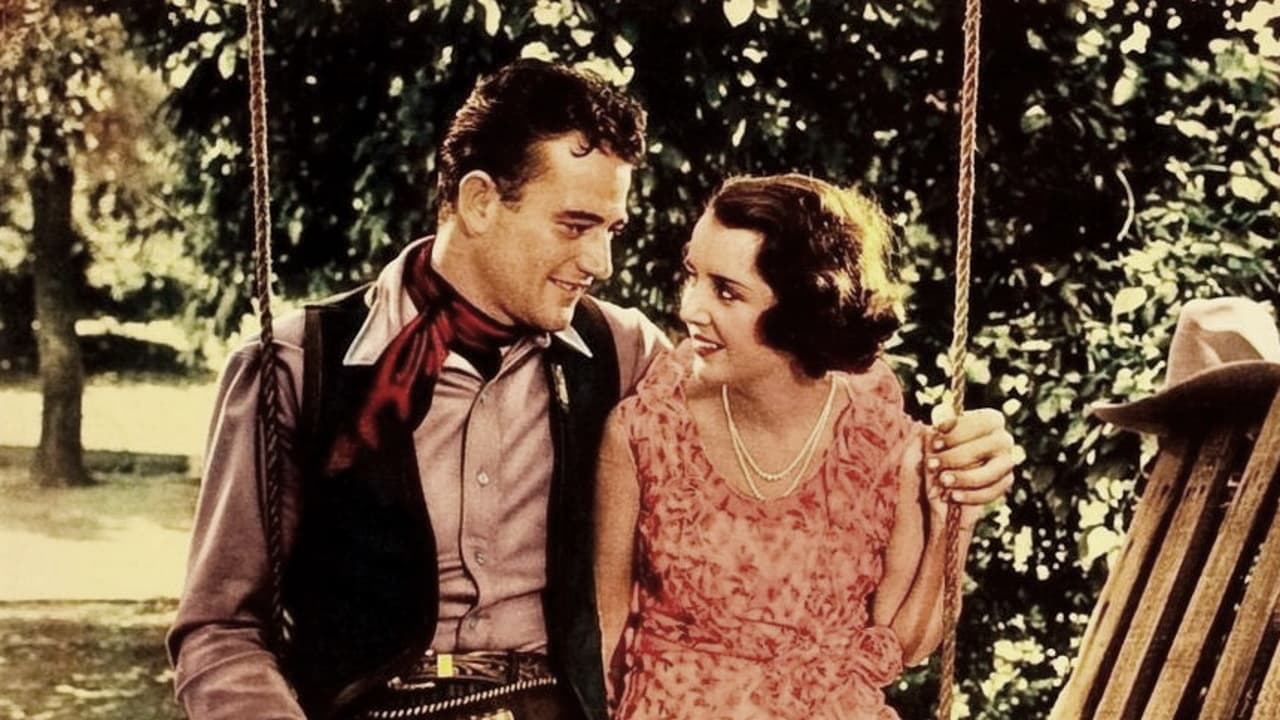
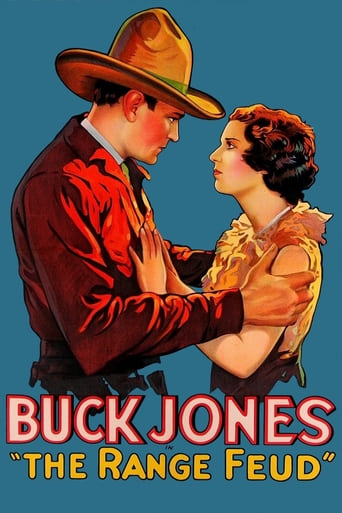
Cristi_Ciopron The open range, range war, rustling oppose two families, threats are uttered, one of the landowners is killed; the town's sheriff, played by Jones (already wearing a suit), should have to solve a murder case (but the only step he takes, as a lawman, is imprisoning Clint and waiting), and there is something to understand. As has been observed by others, Jones had, despite his proletarian look, a largely unmanly, affected acting style, he had the looks of a Gabin or a Cagney, but a strong bad taste in acting. Wayne plays one of his '30s naives. A nicer script would of required from the sheriff to compensate Clint's defenselessness by his own knowledge and wit; but this sheriff is just angry and prostrate by turns. But it might be subtler than that: beyond the sermonize-rs' ineffectiveness, with the mob who cheers the sheriff's burst of anger, there is another, quiet world, such as that of Clint's dad and of the oldster who finds a clue after the rustled cattle has been set free.The sheriff beats someone who dared to doubt his integrity. This is meant to express his inner turmoil and unbalance, but comes across as silly. (On the other hand, the sheriff was right in his choice of a victim.) The world of the sermonize-rs and the cheering mob, eager for a fight, and the quiet world, of the people who actually think; this pair is in the movie. There is a fine take with Clint's dad, after both Clint and the sheriff have left, the 1st running away, and the 2nd chasing him. The dad, standing near the door, tired of his own grit and anger, throws his weapon.As a footnote only, 'The Feud' is cathartic, it has been so for me, not uplifting, but cleansing, so it did me good.In his early talkies, Jones was knocked down, it happens in an earlier vehicle, where his white horse brings the girl (after they have found the missing cattle, and Jones chased the outlaws), it happens here. His character (a drifter there, a sheriff and a man of the place, here) is shown as brave and impulsive, but not quiet and shrewd, nor resourceful or witty; instead, more of an everyman, a proletarian, streetwise in an earlier vehicle, sententious in this one, plus the affected and overacted, over-expressed side. But Jones did have something striking, as opposed to the supposed blandness of other western actors. He didn't always use that strength. He indulged in impersonating silent movie stars, or his own idea of them. The scripts of his westerns have some dramatic interest.A common trait of 'Range Feud' and 'Shadow Ranch' are, beside the social fights of the deep, grassroots pastoral world, the likable bit players, such as both ranchers in this one (but especially Clint's dad), or, here, the cattle seller, who has been called to establish the provenience of the disputed cattle. They root the storyline.Wayne had a loose, playful, somewhat boyish style.As another footnote, this time to the genre: Jones was overacting (yet much of what he was doing was intriguing, despite his very wrong idea of what a cowman should be like), Wayne had a generic playfulness (as a serene country lad, sure of his good looks, and there is a large stream of underplayed irony in his early roles, perhaps a kind of a superiority complex, as he felt superior to what he was doing, or to what he has been given to act), Steele was self-conscientious sometimes, but efficiently humorous when needed, Ritter played his own quiet charm, even unto that undertone of eeriness and honest self-confidence of a fairy tale character (hence, the most intriguingly folkloric of them all), a singer who seems mundane and earthly yet comes across as wholly folkloric.
lge-946-225487 That phrase (above) by another reviewer summed it up so well, I used it as my summary.I first saw Buck Jones movies on the Internet Archive (archive.org), and I generally like his flicks -- especially "Shadow Ranch," a nifty little unconventional Western.This movie was made in 1931, so it's a little less sophisticated (plot-wise and acting-wise) than later Westerns might be. Occasionally an actor will deliver a line in a sort of melodramatic, "Perils of Pauline" manner.But for the most part, it's a good job done by all. John Wayne especially has a natural, winning manner, never melodramatic. The female love-interest, too, gave a good, natural performance, as well as Buck Jones.One thing puzzled me -- at one point the heroine goes into a back room, then comes out and says (approximately), "I just called the doctor, and he'll be over soon." Was that a clinker by the writers, indicating she used a telephone? I don't think this movie is intended to be in that "cusp" period, 1890's or so. (When DID telephones appear?) One thing I heard differently from another reviewer -- after the "peace service," the man says it's NOT Sunday. He says, there's no reason he shouldn't go to the saloon, because it's not Sunday. Though the archive.org version is pretty choppy, and it's easy to miss a word.All in all, not the most exciting Western ever to come down the dusty road, but good solid viewing at a good Luby's price (so to speak).Spoiler: the Duke is innocent.