Moustroll Good movie but grossly overrated
Console best movie i've ever seen.
ShangLuda Admirable film.
ThrillMessage There are better movies of two hours length. I loved the actress'performance.
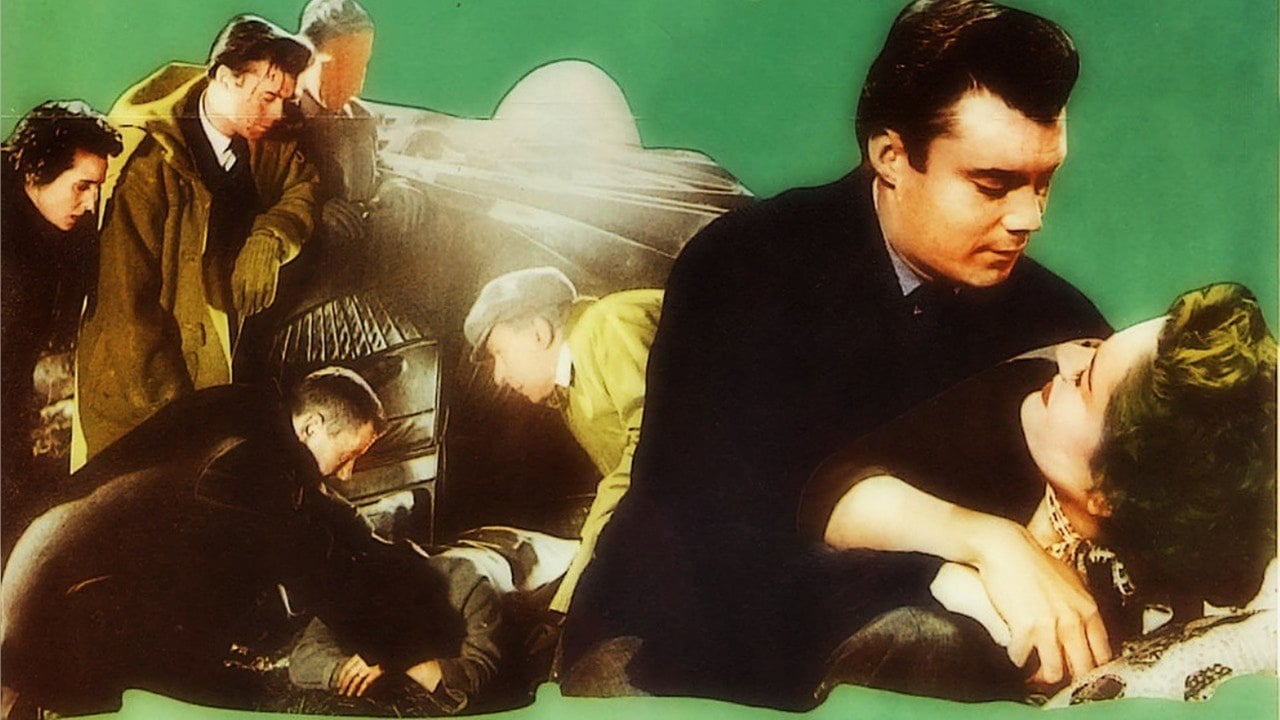
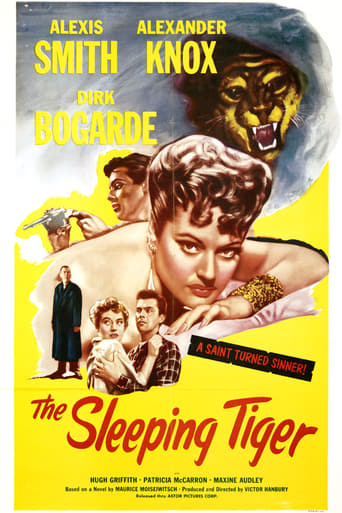
Spikeopath The Sleeping Tiger is directed by Joseph Losey (using the alias Victor Hanbury) and adapted to screenplay by Derek Frye from the novel written by Maurice Moiseiwitswch. It stars Dirk Bogarde, Alexis Smith, Alexander Knox, Patricia McCarron, Maxine Audley and Hugh Griffith. Music is by Malcolm Arnold and cinematography by Harry Waxman.When criminal Frank Clemmons (Bogarde) fails in his attempt to mug psychiatrist Dr. Clive Esmond (Knox), he is surprised to be invited to stay at the good doctor's house instead of going to prison. The doctor's motives are simple, he believes he can reform Frank whilst studying him at close quarters. Frank is only too happy to accept the offer, even more so when a relationship begins to form with Dr. Esmond's wife, Glenda (Smith). However, as passions stir and the tiger awakens, it's unlikely to end happily...Blacklisted in Hollywood, Joseph Losey would find a home in the UK and produce some superb movies. The Sleeping Tiger has thematic links to two other great Losey movies, The Prowler (1951) and The Servant (1963), a sort of meat in the sandwich if you will. Dripping with psychologically redemptive sweat and pulsing with sexual frustrations, it's a film very much concerned with tightening the spring until it eventually explodes. And when it does it's well worth the wait, for there is no pandering to happy days endings, this has a kicker of a twist and it beats a black heart.In the interim some patience is required as the key relationships at the centre of the plotting are steadily drawn, with Losey and Frye tantalising us with shards of character interest at regular intervals. Frank drifting on and off the rails livens proceedings, with the good doctor Esmond's loyalty putting some surprising spice in the story, while Frank's courting of Glenda (horse rides together, taking her dancing at a seedy jazz/blues club) and bullying of the maid, Sally (McCarron), keep us fascinated as to where this will end up.Visually it's firmly in noir territory, more so in the first and last thirds, where Waxman (Brighton Rock) ensures shadows reflect the tonal shifts of plotting and the character's mental health. Arnold's (Academy Award Winner for The Bridge on the River Kwai) score is heavily jazz and blues influenced, mixing sorrowful beats with up-tempo thrums. Cast are excellent. Bogarde and Losey would compliment each other greatly and this is a good indicator of what would come during their five collaborations. Knox (Chase A Crooked Shadow) is wonderfully assured, while Smith (The Two Mrs. Carrolls) owns the movie with some deft changing of character gears.The plot's a bit out there man, and Losey's slow teasing in the mid- sections may annoy those not familiar with his non American work. But this is very much a little ole devil worth seeking out. 7.5/10
classicsoncall I enjoyed reading the other contributor views on this board for "The Sleeping Tiger", particularly since I don't know anything about director Joseph Losey's political leanings and his team-ups with actor Dirk Bogarde. Taking the picture at face value, I had some trouble right from the get-go with Dr. Clive Esmond's (Alexander Knox) willingness to bring a common street thug into his home for the purpose of rehabilitation. Considering the doctor's age, one would surmise that he would have had enough time in his professional career to figure out that this strategy would have a predictably low success rate. After catching Frank (Bogarde) and icy veined wife Glenda (Alexis Smith) in the kitchen together, you would think he would have 'gotten it', but he still remains strangely accepting of his patient's living arrangements.Still, it's kind of fascinating to see these characters go through their paces. London's Metro Club was the perfect destination for Glenda to experience the 'other' side, enticed by Frank's admonition to "go downstairs and put on something..., a little cheaper". For someone who despised rude behavior and bad manners, Glenda willingly casts aside those reservations for a veritable walk on the wild side because of her boring and stuffy marriage to Clive. All fairly predictable.Actually it's those Metro Club scenes that sparked the most interest for me, a jazzy precursor to the decade later birth of the British sound. You have to keep an eye on some of the dance partners who appear downright goofy, and was it just me, or did Frank's chummy squeeze from the Metro wear the same dress on three different occasions. Just an observation.Well even if the story stretches credibility to the breaking point, it's bound to hold your interest in a train wreck sort of way. I really had to groan when the finale brought the sleeping tiger connection to the title in a visually jarring way with the crash through that road sign. Does anyone have ANY idea what that sign was all about?
mukava991 Dirk Bogarde attempts to mug Alexander Knox at gunpoint in a dark London street. Knox overcomes him by twisting his arm. Next, Alexis Smith, Knox's wife, comes home from a trip to Paris, sees Bogarde in her house, assumes he is one of her psychiatrist husband's patients, but is told that he is a criminal who is living under her roof for six months as an experiment in criminal rehabilitation which her husband is carrying out as a humane alternative to sending the young man to jail. She accepts the arrangement with barely a shrug. Bogarde immediately proceeds to verbally and physically abuse the house maid and act rudely toward Smith. Yet for some reason she is attracted to him and soon they are having a hot affair under the husband's nose. And on and on it goes. One startling development after another. There are elements of the overly simplistic psychiatric rehab genre reminiscent of Hollywood classics like Now, Voyager and Spellbound but with a more realistic look and feel. The music is intense and draws attention to itself, from the cacophonous noise that Smith listens to on her home record player to the sizzling live jazz at the Soho dive where she goes to loosen up with her secret lover. Bogarde is supposed to be a low-life criminal but his polished accent and genteel mannerisms seem thoroughly middle-class and this is never explained. Alexander Knox seems made of wood yet is somehow believable as the kind of intellectually preoccupied and unflappable person who just might come up with the idea of inviting a mugger into his home as an eccentric form of research. And Smith, icily self-contained at the beginning, gradually gets a chance to do some dynamic emoting. She's very good in this. The title of the film symbolizes the wild impulses that sleep within us, waiting to be awakened. From the 2007 vantage point there are no important or original social or intellectual insights here but the way the film is edited, photographed and scored are deliberately jarring without distracting from the film's intent. Losey wants to shake us up and he succeeds.
marcslope Joseph Losey, working under a pseudonym after his blacklisting, didn't want to make this overbaked British melodrama. And who can blame him, given the heavy-breathing histrionics of the screenplay, a ridiculous concoction about a psychiatrist and his sexually frustrated wife harboring a hoodlum. The plot turns are unconvincing, the music hilariously overblown, and Alexander Knox, as the shrink, terminally uninteresting.What makes this mess watchable is its game imitation of American noir tropes (dark alleys, femmes fatales, car chases), and some good very early rock-and-roll/jazz in the pub sequences. Also, the film can be viewed as a warmup for the later Losey-Bogarde collaborations, which explored similar themes (guilt, moral ambiguity, the nature of evil) much more expertly.