SpecialsTarget Disturbing yet enthralling
Contentar Best movie of this year hands down!
Roman Sampson One of the most extraordinary films you will see this year. Take that as you want.
Allison Davies The film never slows down or bores, plunging from one harrowing sequence to the next.
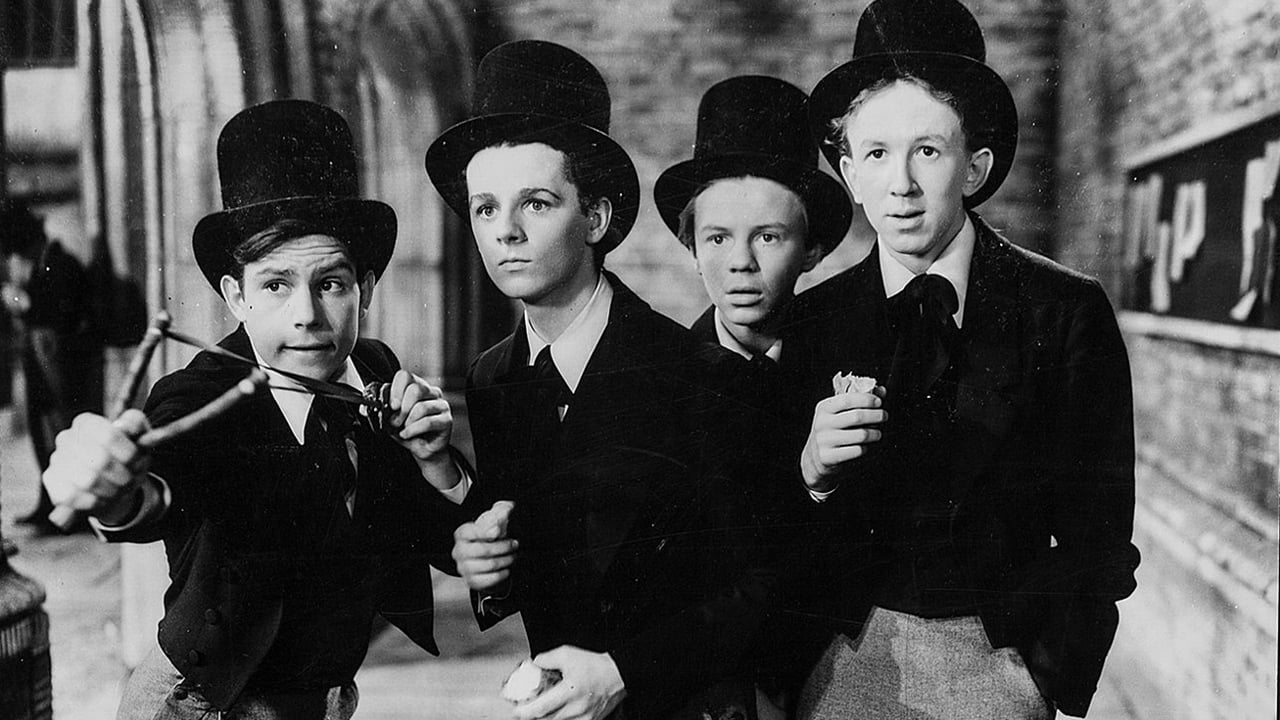
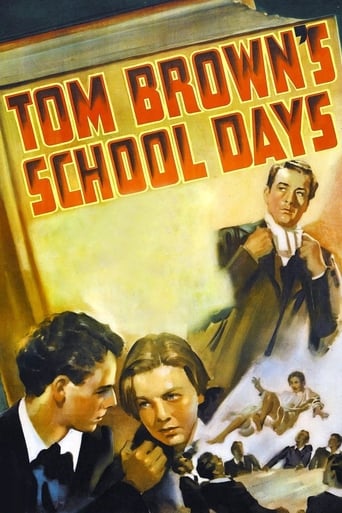
bkoganbing In Mutiny On The Bounty I remember there's a scene where Charles Laughton is questioning someone about who did what. Someone else owned up to it and got a flogging. The guy who wouldn't rat got the same flogging because as Laughton put it, "when I ask for information I expect to get it."That might have been a whole lot easier on poor Tom Brown who is played here by Jimmy Lydon. His father Ernest Cossart has sent him to Rugby School where the headmaster is Cedric Hardwicke who wants to raise manly and honest kids and not bullies.But that's what young Tom is faced with by an older kid played here with relish by Billy Halop of the Dead End Kids. What to do, because the one thing that's worse than bullying is ratting out your fellow students.Lydon stands up to Halop and actually beats him in a well fought if unofficial bout. But Hardwicke finds out about it and expels Halop.Naturally this could only happen if Lydon ratted him out. Tradition dictates he be shunned and shunned he is. Especially by his roommate and previous benefactor Freddie Bartholomew. These kids have an honor system that West Point would envy. And Hardwicke is a man rock bound in his principles and ideas. It all seems a bit silly, but in this day and age we're finally trying to address bullying in a real way. Although this film has its flaws it has assumed an interesting relevancy for today's kids.In this all male setting some women have some good parts. Mack Sennett comedienne Polly Moran plays the owner of the potato shop where the kids get their 'Murphys' which is a rather unflattering reference to what was the national crop of Ireland and probably some Irish farmers worked hard so these kids could enjoy their treats. Gale Storm plays Moran's young daughter who no doubt gets the lads hormones working. And Josephine Hutchinson plays the supportive and kind Mrs. Hardwicke, supportive to the kids as well as her husband.I'd see the BBC mini-series first, but this is not a bad film.
Atreyu_II This film is not the first screen adaption of the classic story of Tom Brown's schooldays. There is actually a version made in 1916 which I never saw but even if I could, sincerely I wouldn't bother with it. It's too old even for me and it's silent (I dislike silent movies).The 1940 version was therefore the first version with sound and the first "true" version. It was directed by Robert Stevenson who'd become famous years later for directing several Disney films such as 'Old Yeller', 'Mary Poppins', 'The Gnome-Mobile', 'The Love Bug', 'Herbie Rides Again' and 'Bedknobs and Broomsticks'.I got to know 3 versions of "Tom Brown's Schooldays": 1940, 1951 and 2005. There is also a 1971 version as a TV show but I never saw it. Of all the versions I got to know, my favorite is the one from 1951. It's a very rare case of a remake that's better than the original (even if it's possibly not as faithful to the book than the 1940 version) and therefore more watchable. But the 1940 film is not bad, it is actually a decent alternative. The 2005 version is fairly weak, no matter how hard they tried.Sir Cedric Hardwicke plays the charismatic Dr. Thomas Arnold with wiseness and class. I like him as Dr. Arnold as much as Robert Newton when it comes to acting, although in this version he is more prone to expelling boys and more intolerant in certain things. As a person, I prefer the more sympathetic Dr. Arnold played by Robert Newton.John Howard Davies is my favorite Tom Brown, but I also like this version's Tom Brown sentimentally played by Jimmy Lydon. If you ask me, Jimmy Lydon makes a different Tom Brown but equally likable and interesting.I have mixed feelings about East in this version. Even if he is greatly played by Freddie Bartholomew, the character himself isn't always very sympathetic. In the 1951 version, East is nicer and friendlier to Tom if still occasionally selfish.Billy Halop is an interesting choice as Flashman, as good as the actor in the 1951 version, just different. Comparing to the 1951 version, Flashman is generally less intimidating although almost as vicious.This version seems more detailed and realistic than the others in some ways and yet not as detailed in other aspects. The beginning is considerably different and many events happen much sooner and quicker than in other versions, which also makes its last 30 minutes different from other versions - with stuff missing in them. Having that said, this version has similarities with the others too.
Mandyjam Sir Cedric Hardwick is superb as Doctor Arnold.It is hard to over-estimate the importance of this headmaster in the history of education. Singlehanded, he revolutionised not only school discipline but also curriculum in one of England's oldest and most famous Public Schools. From Rugby the reforms spread out to Eton, to Harrow and to Winchester. The ideologies were carried by students of these colleges to the Universities of Oxford and Cambridge and out into the world.To our modern eyes, the notion of a master whipping a student with a birch for fighting and expelling a boy for telling a lie seems a bit extreme. But prior to Dr Arnold, punishments were brutal and were administered in an arbitrary manner by each teacher. Boys were exploited by the masters, and junior boys were exploited by the seniors.Hardwick's portrayal of Arnold as a dour, devout and almost obsessively righteous man is wonderful. Arnold hates bullying, but more than anything, he hates lies. Lies, to Arnold, are the mark of real cowardice. Where there are lies, there is Sin and Corruption. A boy that lied to Arnold was immediately expelled.There is an aspect of Dr Arnold's reformation that is only hinted at- It was he who brought modern subjects such as History and Geography to the school syllabus, to stand alongside the Classic as valuable learning.Jimmy Lydon is wonderful as Tom. His emotions, be they glee, grief, pain or loneliness are expressed in an irrepressible manner by this lovely boy with his mobile face and eager expression.
rsoonsa This work is primarily occupied with the major incidents in the life of Thomas Arnold, headmaster of Rugby, and his overcoming of a good deal of resistance in lifting that institution from a tepid state to a position of England's finest public school. The strong direction is by Robert Stevenson, who also contributed mightily to the script, which is rather faithfully based upon the novel of the same name by Thomas Hughes, and which employs the student Tom Brown as Arnold's tactical and ethical surrogate within the scholastic body. Arnold, who must find an answer to the prevalent bullying of the day, is portrayed by Sir Cedric Hardwicke with a stunning performance, ably supported by Josephine Hutchinson as Mrs. Arnold. The film proceeds at a very crisp pace, with the scenario building well as Brown, played with feeling by Jimmy Lydon, prepares to make a stand against older and tyrannical students led by Billy Halop as Flashman. The arteries of the novel are presented with some depth, demonstrating the inculcation into the students of the importance of physical and mental courage, loyalty, and self-reliance, albeit apparently at the cost of some amount of intellectual achievement. The love of the students for Rugby and for their headmaster is presented throughout, the production design, costumes, and editing are all first-rate, and a superb musical score is contributed by Anthony Collins.