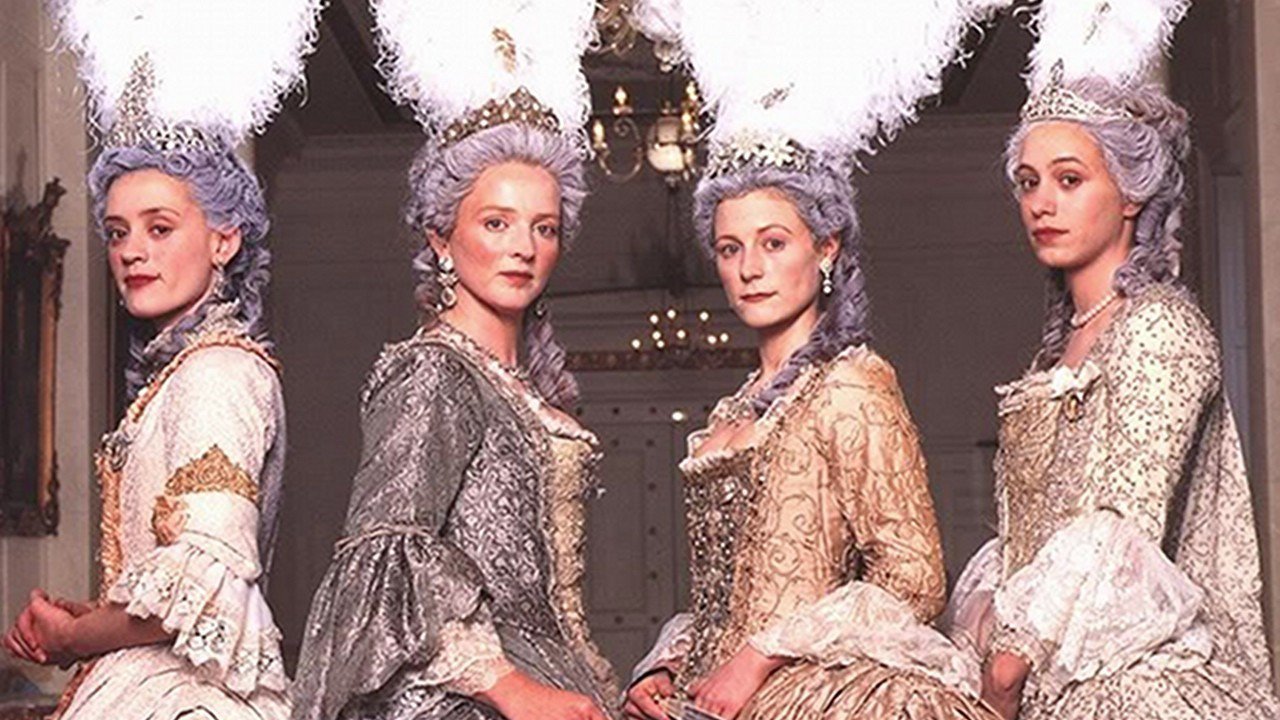
style-2 "I remained convinced that our prestigious family with its significant connections could still hold sway over history." Thus spake Emily, Duchess of Leinster, in 1798, shortly before her son, the notorious and dashing Irish revolutionary, Edward Fitzgerald, was executed for the murder of a British soldier. The world they knew was rapidly changing, and, indeed, there was little, if *anything*, the Duchess or her aristocratic family held sway over anymore, except each other. But a few short years before, she and her sisters were among the most admired and privileged women on earth. The five sisters, Caroline, Emily, Louisa, Sarah and Cecilia, were the great-granddaughters of Charles II with his mistress, Louise de Keroualle, the Duchess of Portsmouth. Their grandfather, the king's illegitimate son, was Charles Lennox, 1st Duke of Richmond. His son, also Charles, became the 2nd Duke of Richmond. The 2nd Duke married an Irish woman, of whose background, both were deeply ashamed of and desperately tried to conceal. When their eldest daughter Caroline, an intelligent woman with a thirst for sophisticated pleasures, eloped with Henry Fox, 1st Baron Holland, the Duke and Duchess were mortified at her insubordination marrying a politician against the wishes of her father brought swift judgement upon Caroline, and she was banished from her family. Caroline missed her family greatly and grieved over their estrangement, but from her home, Holland House (the same one on the Holland House liquor labels), she kept discreet correspondence with her sisters. When second eldest daughter, Emily, begged her parents to allow her to marry James Fitzgerald, 20th Earl of Kildare, an Irish statesman, the parents were aghast at the possibility of Irish blood (re-)entering their bloodline, but fearing another estrangement, they agreed to the marriage, partially because it was evident that the Earl deeply loved Emily, and partially because the Earl was extraordinarily wealthy. She had a son, Edward Fitzgerald, a celebrated United Irishman, whose dedication to Irish freedom would have been incomprehensible to his grandparents. Louisa, the third sister, married Thomas Conolly, a kind and loving man, had a brood of children and lived happily ever after. Fourth sister, Sarah, married badly, had an affair, a baby, a divorce, and complete social ostracism all in short order. Fifth sister, Cecilia, died in her teens. There was also a brother who became 3rd Duke of Richmond.Meticulously adapted from Stella Tillyard's masterpiece by the same name, *Aristocrats* is a story of magnificent scope and grandeur, but told without the usual gassy adoration of the British upper class. Its basis is not embellished reports and embroidered tales, but the massive archives of correspondence and household and historical records left behind by these women. It is as much a story of the sisters' love for each other and their families, as it is a historical drama, but the viewer never forgets that it is through the eyes of these women that we see the epic unfold. As with many epics, it makes short work of some of history's more momentous occasions, but that serves to keep the story focused on the sisters. The production values are top notch. With an excellent screenplay by Harriet O'Carroll, superb direction, and outstanding craftsmanship throughout, *Aristocrats* is as splendid a production as it is a story.
PaulineDorchester This was fabulous. It gets 9 out of 10. What keeps it out of the 10 category is the fact that two big questions are raised in part 2 that part 3 (the conclusion) fails to answer.First of all, what happens to the fifth sister, Cecilia? She first appears in part one as the late-in-life child of the second Duke of Richmond and his duchess. Still a baby when they die, she is sent to Ireland with Louisa and Sarah to be reared by Emily and her husband.In part 2, the reappears as a teenager. When the family learns that Sarah, now married and back in England, is pregnant, she wants to go and help with the new baby. Emily is afraid that she is too weak to travel, having just recovered from an unspecified illness, but she lets her go anyway.The next time we see her she looks very ill indeed, but nobody pays any attention. Emily has come to England to argue with Caroline about who should be blamed for Sarah's bad situation, with Louisa along to mediate. As they quarrel, Cecilia leaves the room, and we see what they miss: she's coughing up blood. When come into the hall, still shouting, they fail to notice that she has collapsed in a corridor.So what happened??? That's the last we see or hear of Cecilia? Did she die? If so, didn't the sisters get back together at least for the funeral?Maybe I need to read the book.The other question is: since Sarah, at least as played by Jodhi May, seems to have lacked something in the personality department, how did she manage to inflame the passions of so many men?